How to Get Sound on AOC Monitor (2026 Complete Guide)
Getting sound to play through your AOC monitor speakers can be surprisingly tricky, even though many AOC monitors come equipped with built-in speakers or audio output jacks. Whether you have just purchased a new AOC monitor, connected it to your PC or gaming console, and found that no sound is coming through, or you are trying to use your monitor as a convenient audio output for a compact desk setup, this comprehensive guide for 2026 will walk you through every possible solution. We will cover Windows settings, cable connections, driver configurations, and monitor-specific adjustments to ensure you get audio working through your AOC monitor as quickly as possible.
Last updated: July 19, 2026 · Estimated reading time: 12 minutes
Table of Contents
- Step 1: Check Your AOC Monitor Hardware
- Step 2: Verify Cable Connections
- Step 3: Configure Windows Audio Settings
- Step 4: Update Audio and Display Drivers
- Step 5: Adjust Monitor On-Screen Settings
- Step 6: HDMI Audio Configuration
- Step 7: DisplayPort Audio Setup
- Alternative Audio Solutions
- Troubleshooting No Sound Issues
- Frequently Asked Questions
Step 1: Check Your AOC Monitor Hardware
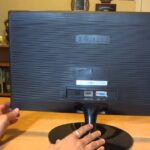
Before diving into software settings, confirm that your specific AOC monitor model actually has built-in speakers. Not all AOC monitors include speakers, and the presence of a headphone jack does not necessarily mean the monitor has internal speakers. Check the specifications on the back of the monitor, in the user manual, or on the AOC product page for your specific model number. The model number is typically found on a sticker on the back of the monitor.
Many AOC gaming monitors, including popular models in the G2, CU34G2, and Q27G2S series, do include built-in speakers, though they are typically modest 2-watt to 5-watt units that provide basic audio output. Some AOC monitors include a 3.5mm audio output jack that allows you to connect external speakers or headphones, even if the monitor does not have built-in speakers. This distinction is important because the audio output configuration differs depending on which feature your monitor supports.
If your AOC monitor has a headphone jack (usually located on the bottom or back edge of the monitor), you can connect external speakers or headphones to this jack and receive audio that is passed through the HDMI or DisplayPort connection. This is a common and convenient setup for desk environments where you want audio without additional cables running to your PC. Understanding which audio capabilities your specific model offers is the essential first step before troubleshooting any software or connection issues.
Step 2: Verify Cable Connections
The type of cable connecting your PC to your AOC monitor determines whether audio can be transmitted. This is the single most common reason people cannot get sound through their monitor, and it is often overlooked.
HDMI Cable
HDMI cables carry both video and audio signals, which means audio can be transmitted from your PC to your monitor through a single HDMI cable. If you are using HDMI, your monitor should be capable of receiving audio. However, not all HDMI ports on your graphics card support audio output. Most modern NVIDIA and AMD graphics cards do output audio through HDMI, but some older cards or specific port configurations may not. Verify that your graphics card specifications confirm HDMI audio support.
DisplayPort Cable
DisplayPort also carries both video and audio, and is the preferred connection for high-refresh-rate gaming monitors. Like HDMI, DisplayPort audio requires that both your graphics card and monitor support audio over DisplayPort. Most modern configurations support this, but the audio stream must be enabled in your display driver settings. If you are using DisplayPort and getting no sound, the issue is almost certainly in your driver or Windows settings rather than the cable itself.
VGA and DVI Cables
If you are connecting your PC to your AOC monitor using VGA or DVI, you will not get audio through the monitor. VGA is an analog video-only connection that does not carry audio. Standard DVI also does not carry audio, with the rare exception of DVI-to-HDMI adapters that can sometimes pass audio if the graphics card supports it. If you are using VGA or DVI, you will need to run a separate 3.5mm audio cable from your PC’s audio output to the monitor’s audio input, or use external speakers connected directly to your PC. For more information about cable configurations, see our guide on whether to plug your monitor into the graphics card or motherboard.
Step 3: Configure Windows Audio Settings
Windows defaults to the last-connected audio device, which means even when your AOC monitor is properly connected and capable of audio output, Windows may not automatically route sound to it. Configuring Windows audio settings correctly is essential for getting sound through your monitor.
Setting Your Monitor as the Default Audio Device
Right-click the speaker icon in the Windows system tray (bottom-right corner of your screen) and select “Sound settings” or “Open Sound settings.” In Windows 11, this opens the Sound settings page where you can see your output devices. In Windows 10, selecting “Sounds” opens the Sound Control Panel. Navigate to the Playback tab to see all available audio output devices.
Look for your AOC monitor in the list of playback devices. It may appear under various names such as “AOC Monitor,” “Generic PnP Monitor,” “AMD High Definition Audio Device,” or “NVIDIA High Definition Audio.” The exact name depends on your graphics card and how the monitor identifies itself to the system. If your monitor does not appear in the list at all, the audio connection is not being detected, and you should revisit your cable connections and driver setup.
Right-click on your AOC monitor in the playback devices list and select “Set as Default Device.” This tells Windows to route all audio output to your monitor. You can also set it as the “Default Communication Device” if you want to use the monitor’s audio output for voice calls and video conferencing. After setting it as default, click “OK” to apply the changes and test your audio by playing a video or music file.
Checking Volume Levels
While in the Sound Control Panel, double-click on your AOC monitor in the Playback tab to open its Properties. Navigate to the Levels tab and ensure the volume slider is set to an audible level. Sometimes the monitor’s audio output is set to zero or muted in Windows, which produces no sound even when everything else is configured correctly. Also check the Enhancements tab and disable any enhancements that might interfere with audio playback. For tips on managing audio settings across devices, see our article on how to get sound from laptop to TV.
Step 4: Update Audio and Display Drivers
Driver issues are a frequent cause of monitor audio problems. Both your graphics card driver and your audio driver must be current and properly configured for audio to work through your AOC monitor via HDMI or DisplayPort.
Graphics Card Driver
The graphics card driver is responsible for transmitting audio over HDMI and DisplayPort. For NVIDIA cards, download the latest driver from NVIDIA’s website using the GeForce Experience application or the direct download page. For AMD cards, use the AMD Software: Adrenalin Edition application or download from AMD’s support page. For Intel integrated graphics, update through Intel’s Driver and Support Assistant.
During driver installation, pay attention to the components being installed. Both NVIDIA and AMD drivers include an audio component (NVIDIA High Definition Audio or AMD High Definition Audio Device) that must be installed for monitor audio to function. If you selected a custom installation and unchecked the audio component, HDMI and DisplayPort audio will not work. Reinstall the driver with the audio component selected to fix this issue.
Windows Audio Driver
Open Device Manager by right-clicking the Start button and selecting “Device Manager.” Expand the “Sound, video, and game controllers” section and look for your audio devices. If you see any devices with a yellow warning icon, right-click and select “Update driver” to resolve the issue. You can also try uninstalling the audio device and restarting your computer, which forces Windows to reinstall the driver from scratch. This often resolves stubborn audio detection problems.
Step 5: Adjust Monitor On-Screen Settings
Your AOC monitor has its own internal settings that control audio output. These settings are accessed through the monitor’s on-screen display (OSD) menu, which you navigate using the buttons or joystick on the monitor itself. Incorrect OSD settings can mute audio or route it to the wrong output even when everything on the PC side is configured correctly.
Press the menu button on your AOC monitor to open the OSD. Navigate to the Audio or Sound section. Ensure that the monitor’s internal volume is not set to zero and that audio is not muted. Some AOC monitors have a separate setting to enable or disable the built-in speakers versus the headphone output jack. If you are trying to use built-in speakers, make sure the speaker output is selected rather than headphone output. If you are using headphones or external speakers connected to the monitor’s audio jack, select headphone output instead.
Some AOC monitors also have an “Audio Source” setting that determines which input the monitor receives audio from. If your monitor has multiple video inputs (for example, HDMI 1, HDMI 2, and DisplayPort), make sure the audio source is set to match the input you are actually using. If your PC is connected to HDMI 1 but the audio source is set to DisplayPort, no sound will come through. Match the audio source to your active video input connection.
Step 6: HDMI Audio Configuration
HDMI audio requires specific configuration in both your graphics card driver and Windows to function properly. Even when the hardware is capable and the cable is correctly connected, software settings can prevent audio transmission.
NVIDIA HDMI Audio Setup
Open the NVIDIA Control Panel by right-clicking on your desktop and selecting “NVIDIA Control Panel.” Navigate to “Set up digital audio” under the Display section. This panel shows all connected displays that support audio over HDMI or DisplayPort. Ensure your AOC monitor is listed and that the audio output is enabled for that display. You can also select the default audio format and sample rate from this panel.
AMD HDMI Audio Setup
Open AMD Software: Adrenalin Edition and navigate to the Settings gear icon. Select the Audio & Video tab and verify that HDMI audio is enabled for your connected display. AMD’s driver sometimes disables HDMI audio by default when a new display is connected, requiring manual activation. Ensure the correct audio device is selected and that the volume level is appropriate.
Step 7: DisplayPort Audio Setup
DisplayPort audio configuration is similar to HDMI but involves some additional considerations specific to the DisplayPort standard. DisplayPort audio is generally more reliable than HDMI audio on modern systems, but misconfiguration can still prevent it from working.
In the NVIDIA Control Panel, DisplayPort audio appears alongside HDMI audio in the “Set up digital audio” section. Ensure your AOC monitor is listed with a checkmark indicating audio is enabled. For AMD systems, the configuration is in the same Audio & Video section of AMD Software. Make sure the correct DisplayPort output is selected if your graphics card has multiple ports.
One common DisplayPort audio issue occurs when using a DisplayPort to HDMI adapter or cable. These adapters do not always pass audio correctly, particularly cheaper passive adapters. If you are using an adapter and cannot get audio to work, try a direct DisplayPort connection or a high-quality active adapter that explicitly supports audio passthrough. For information about display connectivity options and best practices, see our guide on how to check if your monitor is IPS which covers different display technologies and their connectivity features.
Alternative Audio Solutions
If your AOC monitor does not have built-in speakers, or if the built-in speakers are not loud or clear enough for your needs, several alternative audio solutions can complement your monitor setup without cluttering your desk.
Monitor Headphone Jack with External Speakers
If your AOC monitor has a 3.5mm audio output jack, you can connect a pair of powered external speakers directly to the monitor. This setup receives audio through the HDMI or DisplayPort connection and outputs it through the external speakers. Compact desktop speakers from brands like Logitech, Creative, or Audioengine provide significantly better sound quality than most built-in monitor speakers while keeping your desk setup clean with minimal cable clutter.
USB Speakers
USB speakers connect directly to your PC and bypass the monitor entirely for audio. They appear as a separate audio device in Windows and can provide excellent sound quality. USB speakers are plug-and-play on most systems and avoid the potential audio configuration issues that come with monitor-based audio. They are a great option if your monitor does not support audio passthrough or if you prefer higher audio quality.
Wireless Speakers and Bluetooth
Bluetooth speakers or a Bluetooth adapter for your wired speakers offer a completely wireless audio solution. Pair the speaker with your PC through Windows Bluetooth settings, and it appears as a selectable audio output device. Modern Bluetooth codecs like aptX and LDAC provide audio quality that is more than adequate for desktop listening. The convenience of wireless audio is particularly appealing for desk setups where cable management is a priority.
DAC and Amplifier Setup
For audiophile-quality sound, an external USB DAC (Digital-to-Analog Converter) and headphone amplifier provides the best audio quality possible from your PC. These devices connect via USB and output to headphones or powered speakers through high-quality analog connections. They completely bypass your PC’s internal audio hardware, eliminating electrical interference and providing cleaner, more detailed sound. Popular options include the FiiO, Topping, or Schiit product lines.
Troubleshooting No Sound Issues
If you have followed all the configuration steps above and still cannot get sound through your AOC monitor, these additional troubleshooting steps can help identify and resolve the remaining issue.
Try a different cable. Cables can fail internally without any visible damage. A broken audio wire inside an HDMI cable will transmit video perfectly but carry no audio signal. Swap your current cable with a known-good cable to rule out cable failure. This is a quick and inexpensive test that eliminates a surprisingly common cause of audio problems.
Test your monitor’s audio with a different source device. Connect a laptop, gaming console, or another device to your AOC monitor using the same cable. If audio works with the alternative device, the problem is with your PC configuration, not the monitor or cable. If audio does not work with any device, the monitor’s audio hardware may be faulty, and you should contact AOC support for warranty service.
Run the Windows audio troubleshooter by going to Settings > System > Sound > Troubleshoot (Windows 11) or Settings > Update & Security > Troubleshoot > Additional troubleshooters > Playing Audio (Windows 10). The built-in troubleshooter can automatically detect and fix many common audio configuration issues. While it does not solve every problem, it is a quick first step that sometimes resolves the issue without further intervention.
Frequently Asked Questions
Do all AOC monitors have built-in speakers?
No, not all AOC monitors have built-in speakers. While many AOC gaming monitors include speakers, some budget and ultrawide models do not. Check your specific model’s specifications on the AOC website or in the user manual to confirm whether your monitor has built-in speakers or just a headphone output jack. The presence of a headphone jack means you can connect external speakers, but it does not guarantee built-in speakers exist.
Why is there no sound from my AOC monitor even though it has speakers?
The most common reasons are: the monitor is not set as the default audio device in Windows, the monitor volume is muted or set to zero in the OSD menu, the HDMI or DisplayPort cable does not support audio (rare but possible with defective cables), or the graphics card audio driver is not installed. Work through the configuration steps in this guide systematically, and you should be able to identify and resolve the issue. Also verify that the audio source setting in the monitor’s OSD matches the input you are using.
Can I get sound from my AOC monitor using a VGA or DVI connection?
No. VGA and DVI connections do not carry audio signals. If your PC is connected to your AOC monitor via VGA or DVI, you will need to run a separate 3.5mm audio cable from your PC’s audio output to the monitor’s audio input, or use external speakers connected directly to your PC. The simplest solution is to switch to an HDMI or DisplayPort connection, which carries both video and audio through a single cable. For more information about display connections, see our guide on plugging your monitor into the graphics card or motherboard.
How do I increase the volume on my AOC monitor speakers?
Use the monitor’s on-screen display (OSD) menu, accessed by pressing the menu button on the monitor itself. Navigate to the Audio or Sound section and adjust the volume slider. Also check the volume level in Windows by clicking the speaker icon in the system tray and adjusting the volume slider. For the loudest possible output, set both the monitor volume and Windows volume to their maximum levels. Note that built-in monitor speakers are typically modest in volume and may not be sufficient for noisy environments.
Can I use AOC monitor speakers for gaming?
Yes, you can use AOC monitor speakers for gaming, though the audio quality and volume from built-in monitor speakers are generally modest compared to dedicated gaming headsets or desktop speakers. Built-in monitor speakers are adequate for casual gaming, watching videos, and basic system sounds. For competitive gaming or immersive audio experiences, external speakers or a quality gaming headset will provide significantly better sound quality, positional audio, and volume.
Why is the audio quality poor from my AOC monitor speakers?
Built-in monitor speakers are physically small and have limited acoustic chamber space, which inherently restricts their audio quality. They typically lack bass response and have a narrow frequency range compared to dedicated speakers. To improve audio quality, connect external speakers or headphones to the monitor’s audio output jack, or switch to a dedicated USB speaker or DAC setup. Even inexpensive external desktop speakers will sound dramatically better than most built-in monitor speakers.
Does DisplayPort carry audio to AOC monitors?
Yes, DisplayPort supports audio transmission just like HDMI. When your PC is connected to your AOC monitor via DisplayPort, audio should be available if the correct drivers are installed and the monitor is set as the default audio device in Windows. If DisplayPort audio is not working, check that your graphics card driver includes the DisplayPort audio component and that the monitor appears as an audio output device in Windows Sound settings.
Can I connect Bluetooth headphones to my AOC monitor?
AOC monitors do not have built-in Bluetooth capability, so you cannot connect Bluetooth headphones directly to the monitor. However, you can connect Bluetooth headphones to your PC and set them as the audio output device in Windows. The audio will play through your Bluetooth headphones regardless of the video connection to your AOC monitor. Pair your headphones through Windows Bluetooth settings and select them as the default playback device.