White Light on Motherboard No Display (2026 Complete Guide)
Seeing a white light illuminated on your motherboard while your monitor displays nothing is one of the most confusing and alarming situations a PC builder or user can encounter. Unlike other motherboard diagnostic LEDs that clearly indicate specific problems — red for CPU errors, amber for memory issues — a white LED that stays lit with no display output can mean several different things depending on your motherboard brand and model. In 2026, most major motherboard manufacturers including ASUS, MSI, Gigabyte, and ASRock have adopted diagnostic LED systems that use color-coded lights to indicate POST (Power-On Self-Test) status. A white light, specifically, typically indicates a video or graphics-related problem, but the exact meaning varies between brands and even between different motherboard models from the same manufacturer.
Last updated: July 19, 2026 | Estimated reading time: 12 minutes
Table of Contents
- What the White Light Means
- Differences Between Motherboard Brands
- Understanding the VGA Debug LED
- Common Causes of No Display
- GPU and Graphics Card Checks
- Cable and Connection Issues
- RAM and CPU Troubleshooting
- BIOS Reset and Recovery
- GPU Temperature and Cooling
- Frequently Asked Questions
What the White Light Means
On most modern motherboards, the diagnostic LED system uses a sequence of colored lights that illuminate during the POST process. The standard sequence is typically CPU (red) then DRAM (red/yellow) then VGA (white) then BOOT (green/yellow). If the POST process stalls at the VGA stage, the white light remains illuminated and the system fails to produce a display output because it cannot initialize the graphics subsystem.
The white light indicating a VGA problem does not necessarily mean your graphics card has failed. It can indicate any issue that prevents the graphics subsystem from initializing properly, including a poorly seated GPU, insufficient power to the graphics card, a damaged PCIe slot, a monitor connection issue, or even a BIOS configuration problem that is preventing the system from detecting the graphics hardware.
In some cases, the white light can illuminate during a normal boot sequence and then turn off once the POST completes successfully. This is normal behavior — the light briefly illuminates while the graphics subsystem is being tested, then extinguishes when the test passes. If the white light remains on permanently, however, the POST has failed at the graphics stage and no display output will be produced.
Understanding this distinction is critical for accurate troubleshooting. A white light that briefly flashes during boot and then turns off indicates a normal, successful boot. A white light that remains continuously lit indicates a POST failure at the graphics stage, requiring investigation and resolution before the system can produce a display output.
Differences Between Motherboard Brands
While the general principle of a white VGA indicator light is fairly consistent across brands, the specific implementation and meaning can vary. Knowing how your particular brand handles diagnostic LEDs helps you interpret the light correctly and avoid unnecessary troubleshooting.
ASUS motherboards use the Q-LED system, which includes four diagnostic LEDs labeled CPU, DRAM, VGA, and BOOT. The VGA LED is white on most ASUS boards. When the VGA LED is lit, it indicates the POST has failed at the graphics initialization stage. ASUS motherboards also include a two-digit Q-Code display on higher-end models that provides more detailed diagnostic information through alphanumeric codes.
MSI motherboards use EZ Debug LEDs that are similarly labeled CPU, DRAM, VGA, and BOOT. On MSI boards, the VGA LED is typically white or red depending on the model. MSI’s debug LED system works identically to ASUS’s — if the VGA LED remains lit after boot, the system cannot initialize the graphics subsystem.
Gigabyte and Aorus motherboards feature a Debug LED or LED status indicator system. On Gigabyte boards, the white LED indicator typically corresponds to the VGA check. Some Gigabyte models use a different labeling convention, so checking your specific model’s manual is important for accurate interpretation.
ASRock motherboards include a similar diagnostic LED system, though the color coding and labeling may differ slightly from other brands. ASRock boards often include a Dr. Debug display on higher-end models that provides more detailed POST code information in addition to the basic diagnostic LEDs.
| Brand | System Name | White LED Meaning | Extra Diagnostics |
|---|---|---|---|
| ASUS | Q-LED | VGA initialization failure | Q-Code display (high-end) |
| MSI | EZ Debug LED | VGA check failure | Debug Code display (high-end) |
| Gigabyte | Debug LED | VGA issue | Debug Code display (high-end) |
| ASRock | Dr. Debug | VGA/Display failure | Dr. Debug display |
Understanding the VGA Debug LED
The VGA debug LED is the specific component of the diagnostic system that illuminates in white when the POST fails to detect or initialize a graphics device. Understanding how the VGA check works during POST helps you troubleshoot the problem more effectively.
During the POST process, the motherboard’s BIOS/UEFI firmware performs a sequence of hardware checks. After verifying the CPU and memory are functioning correctly, the firmware attempts to initialize the graphics subsystem. This involves detecting the primary graphics device — whether it is a dedicated GPU in a PCIe slot or the CPU’s integrated graphics — and establishing communication with it.
If the BIOS cannot detect any graphics device, or if it detects a device but cannot communicate with it properly, the VGA check fails and the white LED remains illuminated. Common reasons for this failure include a GPU that is not properly seated in its PCIe slot, a GPU that is not receiving adequate power, a damaged PCIe slot, or a BIOS setting that is configured to use the wrong graphics output.
Some motherboards attempt to fall back to integrated graphics when a dedicated GPU is not detected. If your CPU has integrated graphics (Intel processors typically do, while AMD processors may or may not depending on the model), the motherboard should be able to produce a display output using the integrated graphics even if the dedicated GPU is not working. If the white light remains on even with integrated graphics, the issue may be with the motherboard itself rather than the graphics card.
Understanding VGA light behavior is crucial. For more information about white VGA light specifically, see our detailed guide on white VGA light on motherboard issues and solutions.
Common Causes of No Display
A white motherboard light with no display output can be caused by several different issues, ranging from simple connection problems to serious hardware failures. Systematic troubleshooting helps you identify the specific cause efficiently.
The most common cause is an improperly seated graphics card. PCIe slots require the GPU to be firmly seated with the retention clip fully engaged. A GPU that is slightly loose may make partial contact but not enough for reliable communication, causing the VGA check to fail. Reseating the GPU is often the quickest and easiest fix.
Insufficient GPU power is another frequent cause. Modern graphics cards require dedicated power connectors from the power supply unit. If these connectors are not fully plugged in or if the PSU cannot provide adequate power, the GPU will not initialize properly, resulting in a white VGA LED and no display output.
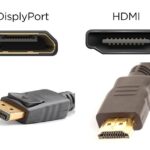
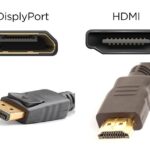
BIOS configuration issues can also cause the white VGA light. If the BIOS is configured to output video through a specific interface (like HDMI) but your monitor is connected through a different interface (like DisplayPort), the system may not detect a valid display output. Resetting the BIOS to default settings can resolve these configuration issues.
Monitor connection problems, while less related to the motherboard’s VGA check, can sometimes prevent display output even when the GPU is functioning correctly. A damaged cable, a wrong monitor input selection, or a faulty monitor can all result in no display output even though the system has booted successfully.
GPU and Graphics Card Checks
When facing a white VGA light with no display, the graphics card is the first component to investigate. A systematic approach to checking the GPU helps you identify the specific issue without replacing unnecessarily.
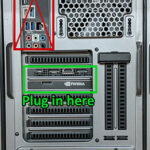
Power off the system completely and unplug it from the wall outlet. Open the case and locate your graphics card in the primary PCIe x16 slot. Check that the retention clip at the end of the PCIe slot is fully engaged, locking the GPU in place. If the clip is not engaged, the GPU may not be making proper contact with the slot.
Remove the GPU from the PCIe slot by pressing the retention clip and gently pulling the card straight out. Inspect the gold contacts on the bottom of the GPU for damage, corrosion, or debris. Clean the contacts gently with compressed air or isopropyl alcohol if needed. Also inspect the PCIe slot on the motherboard for any visible damage or debris.
Reinsert the GPU firmly into the PCIe slot, ensuring it is fully seated and the retention clip snaps into place. Apply even pressure across the top of the card as you press it down. The GPU should seat smoothly without requiring excessive force.
Verify that all GPU power connectors are fully plugged in. Modern GPUs require one or more 6-pin, 8-pin, or 12-pin power connectors from the PSU. Each connector must be fully seated with no gaps between the connector and the GPU’s power socket. If your PSU has multiple PCIe power cables, make sure you are using the correct cables — PCIe power cables are different from CPU power cables and are not interchangeable.
If you have access to a different GPU, try installing it in your system to determine whether the original GPU has failed. Similarly, try your original GPU in a different system if possible. This cross-testing definitively identifies whether the GPU or the motherboard is the source of the problem.
Cable and Connection Issues
Cable and connection issues are among the simplest problems to check and fix when troubleshooting a white VGA light with no display. Even when the GPU is functioning perfectly, a bad cable or wrong connection can prevent any image from appearing on your monitor.
Check the video cable connection at both ends — the GPU output and the monitor input. Cable connections can work loose over time, especially if the computer is moved or if the cables are under tension. Unplug the cable from both ends and firmly reconnect it, ensuring the connector is fully inserted and the screws (if present) are tightened.
Try a different video cable if one is available. Cables can develop internal breaks, damaged connectors, or shield faults that prevent signal transmission. Swapping to a known-good cable is a quick way to rule out cable-related issues. Make sure you are using the correct cable type for your connection — HDMI, DisplayPort, DVI, or VGA.
Verify that your monitor is set to the correct input source. Most monitors have multiple input ports (HDMI, DisplayPort, VGA, etc.) and must be told which input to display. Use the monitor’s on-screen menu to select the input that matches the cable you are using. Many monitors have an auto-detect feature that automatically switches to the active input, but this does not always work reliably.
Test with a different monitor if possible. This helps determine whether the problem is with the display output from your GPU or with the monitor itself. If a different monitor works with your system, the original monitor may be faulty or may not support the output signal from your GPU.
For laptops with both integrated and dedicated graphics, the video output may be connected to different GPUs depending on the port. Some HDMI ports may be connected to the integrated GPU while DisplayPort is connected to the dedicated GPU. Check your laptop’s documentation to understand which ports connect to which GPU.
RAM and CPU Troubleshooting
While the white VGA light specifically indicates a graphics-related POST failure, issues with RAM or the CPU can sometimes manifest as VGA failures because the system cannot complete the boot process far enough to initialize the graphics subsystem.
RAM problems can cause the POST to fail at any stage, including the VGA stage. If the system cannot properly access memory during the boot process, it may fail to initialize the GPU even though the GPU itself is functioning correctly. Try reseating your RAM modules by removing them and firmly reinserting them until the retention clips snap into place.
Testing with a single RAM module at a time can identify a faulty module. If the system boots with one module but not the other, the removed module is likely faulty. Also try different RAM slot combinations, as a damaged slot can cause the same symptoms as a damaged module.
CPU issues are less common but can cause POST failures at any stage. If the CPU is not properly seated in its socket, or if the CPU cooler is applying uneven pressure, the system may fail to boot properly. Check that the CPU cooler mounting screws are evenly tightened and that the cooler is making proper contact with the CPU.
For systems that show the white VGA light after a recent CPU or cooler change, double-check that the CPU is correctly oriented in the socket and that no pins are bent or damaged. Intel LGA and AMD AM4/AM5 sockets have specific alignment indicators that ensure correct CPU orientation.
BIOS Reset and Recovery
BIOS misconfiguration is a surprisingly common cause of white VGA lights with no display output. If the BIOS settings have been changed incorrectly — for example, disabling the primary PCIe slot, setting an incorrect primary display adapter, or enabling features incompatible with your hardware — the system may fail to initialize the graphics subsystem.
The simplest way to reset the BIOS to default settings is by clearing the CMOS. This process resets all BIOS settings to their factory defaults. Most motherboards have a clear CMOS jumper on the PCB — usually a two or three-pin header with a jumper cap. Moving the jumper cap to the clear position for 10-15 seconds while the system is powered off resets the CMOS.
If your motherboard does not have a clear CMOS jumper, you can remove the CMOS battery (a coin-cell battery on the motherboard) for several minutes while the system is unplugged. This allows the CMOS to lose its stored settings and revert to defaults when power is restored.
Some motherboards have a clear CMOS button on the rear I/O panel that can be pressed with a paperclip or similar tool. This is the most convenient CMOS clearing method and does not require opening the case or removing any components.
After clearing CMOS, power on the system and enter the BIOS setup (usually by pressing Delete or F2 during boot). Verify that the primary display adapter is set correctly — it should be set to “Auto” or to the PCIe slot where your GPU is installed. Save the settings and restart the system to see if the white VGA light issue is resolved.
GPU Temperature and Cooling
GPU thermal issues can sometimes prevent the graphics card from initializing properly during POST. If the GPU’s thermal protection is triggered before or during the boot process, the card may refuse to initialize, resulting in a white VGA light and no display output.
This situation can occur if the GPU cooler has become detached, if the thermal paste has degraded, or if the GPU’s fans are not functioning. Without adequate cooling, the GPU’s temperature can spike rapidly during initialization, triggering thermal protection before the card can complete its POST routine.
Check that the GPU’s fans are spinning when the system is powered on. If the fans are not spinning, the GPU cooler may have a fan failure or a power connection issue. Some GPUs have a zero-RPM mode where fans do not spin at low temperatures, but the fans should start spinning when the system is powered on and the GPU is under any load.
If your GPU is several years old, the thermal paste between the GPU die and the cooler may have degraded, reducing cooling effectiveness. Replacing the thermal paste on an older GPU can resolve thermal issues that prevent proper initialization. This is a moderately difficult procedure that requires removing the GPU cooler, cleaning off the old paste, and applying fresh thermal compound.
For systems where the GPU runs consistently hot, improving overall case airflow can help. Adding case fans, ensuring cables are not blocking airflow paths, and maintaining clean dust filters all contribute to lower GPU temperatures. Learn more about GPU temperature management at our comprehensive guide to lowering GPU temperatures.
When troubleshooting GPU power issues, understanding proper power supply connections is essential. See our guide on connecting an RTX 3080 to your PSU for detailed information about GPU power connections and requirements.
Frequently Asked Questions
What does a white light on the motherboard mean?
A white light on the motherboard typically indicates a VGA (video/graphics) POST failure. The system has detected an issue with the graphics subsystem that prevents it from producing a display output. Common causes include a poorly seated GPU, insufficient GPU power, or BIOS misconfiguration. The exact meaning can vary between motherboard brands, so consult your manual for specific interpretation.
Why is there a white light on my motherboard but no display?
The white light indicates the POST has failed at the graphics initialization stage. Without successfully completing this check, the system cannot send a video signal to your monitor. Common fixes include reseating the GPU, checking GPU power connections, resetting BIOS, or trying a different video cable. Work through these steps systematically to identify the specific cause.
Is the white light always a problem?
No, a white light that briefly illuminates during boot and then turns off is normal. This indicates the VGA check is being performed and has passed. Only a white light that remains continuously illuminated indicates a problem. If your system boots normally and produces a display output, the brief white light during boot is not a concern.
Can I fix the white VGA light issue myself?
Many white VGA light issues can be resolved at home. Reseating the GPU, checking power connections, resetting BIOS, and trying different cables are all straightforward fixes that do not require advanced technical skills. More serious issues like a failed GPU or motherboard damage may require professional repair or component replacement.
Do I need a separate GPU for my system to display anything?
It depends on your CPU. If your CPU has integrated graphics (most Intel processors and some AMD processors), the motherboard can produce a display output using the integrated graphics even without a dedicated GPU. If your CPU lacks integrated graphics (many AMD Ryzen processors), you must have a working dedicated GPU for any display output.
Will reseating the GPU fix the white light?
Reseating the GPU fixes the issue in a significant number of cases, particularly if the GPU had worked loose during shipping or case movement. Power off the system, remove the GPU, inspect the slot and contacts, and firmly reseat the card with the retention clip fully engaged. This simple step resolves many white VGA light problems.
Can a BIOS update fix the white VGA light?
A BIOS update can resolve compatibility issues that cause VGA initialization failures. If your motherboard supports BIOS Flashback (updating BIOS without a CPU or display), you can update the BIOS even when the system cannot display an image. Check your motherboard’s documentation for BIOS Flashback instructions.
What if my GPU fans are not spinning?
Non-spinning GPU fans can cause thermal issues that prevent GPU initialization. Check the fan power connection, test the fans by briefly applying power, and verify the GPU cooler is properly mounted. Some GPUs have a zero-RPM mode at low temperatures, so fans not spinning at idle is sometimes normal — they should start when the GPU is under load or during boot.
Should I try a different PCIe slot?
Trying a different PCIe slot is a valid troubleshooting step, particularly if the primary slot may be damaged. Move the GPU to an alternative PCIe x16 slot and test. If the white light disappears and display output works in the alternate slot, the original slot may be damaged or have a connection issue. Note that some motherboards restrict secondary PCIe slot bandwidth or functionality.
What if none of the troubleshooting steps work?
If you have tried reseating the GPU, checking connections, resetting BIOS, and trying different cables without success, the issue may be a failed GPU, damaged motherboard, or incompatible hardware combination. Test the GPU in a different system to confirm whether it has failed. If the GPU works elsewhere, the motherboard may need professional diagnosis or replacement.