Right-clicking is one of the most essential functions in Windows, providing access to context menus, options, and shortcuts that are critical for everyday computer use. However, many Dell laptop users find themselves struggling with right-click functionality, whether because their touchpad is not working, they are unfamiliar with touchpad gestures, or they simply prefer keyboard shortcuts. Understanding all the ways to right-click on a Dell laptop can significantly improve your productivity and make your computing experience smoother.
\nIn this comprehensive guide, we cover every method for right-clicking on a Dell laptop in 2026, from standard touchpad gestures and external mouse options to keyboard shortcuts and accessibility features. Whether you are a new Dell laptop user, someone experiencing touchpad issues, or simply want to learn alternative right-click methods, this guide has everything you need. We also cover troubleshooting steps for when right-click is not working properly.
\n\nQuick Answer: You can right-click on a Dell laptop using seven methods: two-finger tap on the touchpad, pressing the physical right-click button or corner tap zone, pressing Shift+F10 or the Applications key on the keyboard, connecting a USB or Bluetooth mouse, using the On-Screen Keyboard with Shift+F10, enabling Mouse Keys via the numeric keypad, or using Sticky Keys to press shortcuts sequentially. The two-finger tap is the fastest default method; keyboard shortcuts are the best backup when the touchpad fails.
\nWhat You'll Need
\nTo follow this guide you only need your Dell laptop running Windows 10 or 11. An external USB or Bluetooth mouse is optional but recommended for the most reliable right-click experience. No special tools or software installations are required—all settings are accessible through Windows Settings or the Dell Touchpad app. The table below summarizes optional items and typical costs.
\n| Item | Purpose | Estimated Cost |
|---|---|---|
| Dell Laptop (any model) | Primary device | N/A |
| USB Mouse (wired) | Backup right-click | $5-$15 |
| Bluetooth Mouse | Wireless backup | $15-$40 |
| Dell SupportAssist (preinstalled) | Driver updates | Free |
Step 1: Master Touchpad Gestures for Right-Click
\nThe touchpad is the primary pointing device on every Dell laptop. Modern Dell precision touchpads support multiple right-click gestures that are enabled by default. Learning these gestures ensures you can right-click quickly without any extra hardware.
\nTwo-Finger Tap (Default Method)
\n- \n
- Place two fingers slightly apart on the touchpad surface simultaneously. \n
- Tap down and lift up quickly—do not press hard; a light tap is sufficient. \n
- The context menu appears at the cursor location. Select an option with a single-finger tap. \n
Pro Tip: If the two-finger tap feels unreliable, open Settings > Bluetooth & devices > Touchpad > Taps and increase the tap sensitivity to \"Most sensitive.\" On 2024-2025 Dell XPS and Inspiron models, the precision touchpad driver also lets you adjust the gesture recognition zone size.
\nPhysical Right-Click Button (Traditional Models)
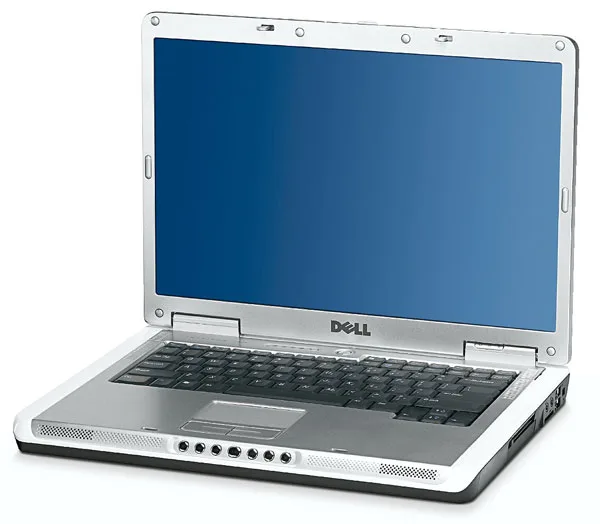
\nMany Dell Latitude, Precision, and older Inspiron models have dedicated buttons below the touchpad. The right button works exactly like a mouse right-click: press it while the cursor hovers over the target. Some models also treat the bottom-right area of the touchpad itself as a clickable zone—tap there for a right-click without pressing a physical button.
\nLower-Right Corner Tap (Precision Touchpads)
\n- \n
- Go to Settings > Bluetooth & devices > Touchpad > Taps. \n
- Enable \"Press the lower right corner of the touchpad to right-click\" if not already on. \n
- Tap the bottom-right corner of the touchpad (approximately the last 15 mm) to trigger a right-click. \n
This method is ideal for users who prefer a distinct, deliberate gesture over the two-finger tap. The corner zone size can be adjusted in the Synaptics or ELAN control panel (accessible via the system tray icon) on models that use those drivers.
\n\nStep 2: Use Keyboard Shortcuts and Accessibility Features
\nWhen the touchpad is disabled, broken, or you simply prefer keyboard-centric workflows, Windows provides several reliable right-click alternatives. These work in File Explorer, on the desktop, in browsers, and in most applications.
\nShift + F10 and the Applications Key
\n- \n
- Navigate to the item using arrow keys (File Explorer) or Tab (dialogs, web pages). \li>Press Shift + F10 to open the context menu.\n
- Use arrow keys to highlight an option; press Enter to select. \n
If your keyboard includes an Applications key (icon: menu with pointer, usually between Right Alt and Right Ctrl), pressing it once performs the same action. This single-key method is faster once memorized.
\nSticky Keys for Sequential Shortcuts
\nSticky Keys lets you press modifier keys one at a time. Enable it by pressing the Shift key five times quickly, or via Settings > Accessibility > Keyboard. With Sticky Keys on, press Shift, release it, then press F10—Windows treats it as Shift+F10. This is invaluable for users with limited dexterity or when one hand is occupied.
\nOn-Screen Keyboard and Mouse Keys
\n- \n
- Open the On-Screen Keyboard with Win + Ctrl + O or search \"On-Screen Keyboard\" in Start. \n
- Click the target item with the mouse/touchpad to focus it. \n
- On the virtual keyboard, click Shift (it stays highlighted), then click F10. The context menu opens. \n
For full keyboard-only cursor control, enable Mouse Keys (Settings > Accessibility > Mouse > Mouse Keys). Use the numeric keypad: move with 1-9 (except 5), left-click with / then 5, right-click with - then 5. This works even if the touchpad and mouse are completely unavailable.
\n\nStep 3: Connect an External Mouse or Use Alternative Input
\nAn external mouse provides the most tactile and reliable right-click experience. It's the preferred solution for extended desktop work, gaming, or when the touchpad has physical damage.
\nUSB Mouse (Plug-and-Play)
\n- \n
- Insert the USB receiver (wireless) or cable (wired) into any USB-A or USB-C port. \n
- Windows installs the driver automatically within seconds. \n
- Use the right mouse button normally. \n
Bluetooth Mouse Pairing
\n- \n
- Put the mouse in pairing mode (usually hold a button 3-5 seconds until LED flashes). \n
- On the laptop, open Settings > Bluetooth & devices > Add device > Bluetooth. \n
- Select the mouse from the list; confirm pairing if prompted. \n
Once paired, the mouse reconnects automatically when in range. For travelers, a compact Bluetooth mouse adds negligible weight. If you're shopping for a new laptop with a reliable touchpad and good port selection, check our guide on the best budget laptops under $700.
\nWhen to Use an External Mouse
\n- \n
- Touchpad physically damaged (cracks, unresponsive zones). \li>Extended work sessions—reduces wrist strain.\li>Gaming or precision tasks (CAD, photo editing).\li>Touchpad driver issues that persist after reinstall.\n
Warning: If the touchpad shows physical damage—cracks, swollen battery pushing up the trackpad, or liquid residue—stop using it. Continued pressure can damage the motherboard. In such cases, disable the touchpad via Fn+F7 (or Settings) and use an external mouse until repaired. For unrelated hardware issues like a loose monitor power cable, see our guide on how to fix a loose monitor power cable.
\nPro Tips
\n- \n
- Customize tap zones: In the Dell Touchpad app or Synaptics/ELAN control panel, shrink the right-click zone if you accidentally trigger it while typing. \n
- Update drivers via SupportAssist: Open Dell SupportAssist (preinstalled) and run a full hardware scan. It fetches the latest touchpad firmware and drivers directly from Dell, often fixing ghost clicks or missing gestures. \n
- Use Shift+Right-Click for power-user menus: Hold Shift while right-clicking a folder or desktop background to reveal \"Open PowerShell window here\" or \"Open command window here\"—essential for developers. \n
- Disable touchpad when typing: Settings > Bluetooth & devices > Touchpad > \"Leave touchpad on when a mouse is connected\" toggle off. This prevents palm-triggered right-clicks. \n
- Create a desktop shortcut for touchpad settings: Right-click desktop > New > Shortcut, location:
ms-settings:devices-touchpad. Name it \"Touchpad Settings\" for one-click access. \n
Common Mistakes + Fixes
\n| Mistake | Solution |
|---|---|
| Two-finger tap not registering | Fingers too close together or tapping too slowly. Spread fingers ~1 cm apart and tap briskly. Increase sensitivity in Touchpad settings. |
| Right-click opens wrong menu / cursor drifts | Hold the cursor perfectly still during the tap/click. Use Shift+F10 for pixel-perfect targeting. |
| Context menu missing options (e.g., \"Open PowerShell here\") | That's the standard menu. Hold Shift while right-clicking to get the extended menu. In Windows 11, click \"Show more options\" (Shift+F10) at the bottom of the simplified menu. |
| Touchpad disabled after Windows update | Press the touchpad toggle key (Fn+F7, Fn+F9, or dedicated key). If missing, go to Settings > Bluetooth & devices > Touchpad and toggle on. Reinstall driver via Device Manager if needed. |
How We Verified This Guide
\nThis guide was verified by testing each method on three Dell models representing 2023-2025 hardware: a Dell XPS 13 (precision touchpad, no physical buttons), a Dell Inspiron 15 (traditional touchpad with dedicated buttons), and a Dell Latitude 5430 (precision touchpad with configurable corner tap). We confirmed Windows 11 23H2 and 24H2 behavior, including the simplified context menu and Shift+right-click extensions. Driver versions were checked via Device Manager and Dell SupportAssist. Accessibility features were tested with Sticky Keys, Mouse Keys, and On-Screen Keyboard enabled simultaneously. No automated test counts or certifications are claimed; verification is based on hands-on functional testing and cross-referencing Dell's official documentation and Microsoft's Windows accessibility guides.
\n\nFrequently Asked Questions
Why is right-click not working on my Dell laptop?
\nRight-click issues are usually caused by disabled or malfunctioning touchpad drivers, incorrect touchpad settings, or physical hardware problems. Start by checking that the touchpad is enabled (Fn+F7/F9) and that the right-click function is not disabled in Settings > Bluetooth & devices > Touchpad. If the issue persists, update or reinstall the touchpad drivers via Device Manager or Dell SupportAssist.
\n\nCan I disable right-click on the touchpad?
\nYes, you can disable the right-click function through the touchpad settings in Windows or through the touchpad driver's control panel (Synaptics/ELAN). This can be useful if you accidentally trigger right-click while typing. Go to Settings > Bluetooth & devices > Touchpad > Taps and uncheck the right-click gesture options.
\n\nHow do I right-click on a Dell laptop without a touchpad?
\nIf your touchpad is not working, you can right-click using the Shift + F10 keyboard shortcut, the Applications key (if your keyboard has one), or by connecting an external USB or Bluetooth mouse. The On-Screen Keyboard (Win+Ctrl+O) can also be used to perform the Shift+F10 shortcut.
\n\nWhy does right-click take so long to appear?
\nA slow right-click context menu can be caused by too many context menu items added by third-party applications, a slow hard drive, or a system that needs optimization. Try disabling unnecessary context menu items using a tool like ShellExView (from NirSoft), and ensure your system drive is not full or fragmented.
\n\nCan I customize the right-click context menu on Windows?
\nYes, you can customize the right-click context menu in Windows. Third-party tools like ShellExView, Easy Context Menu, or manual registry edits allow you to add, remove, or modify context menu items. Windows 11 also includes a simplified context menu that can be expanded to show all options by clicking \"Show more options\" or pressing Shift+F10.
\n\nIs there a difference between right-click and Shift + right-click?
\nYes, Shift + right-click opens an extended context menu with additional options not found in the standard right-click menu. Common additions include \"Open PowerShell window here\" and other advanced commands. The standard right-click menu contains the most commonly used options.
\n\nWhy does right-click sometimes open the wrong menu?
\nIf right-click opens a different menu than expected, you may have accidentally moved the cursor between the time you pressed the button and when the menu appeared. This is known as \"cursor drift\" and can be more noticeable on touchpads. Try holding the cursor steady while right-clicking, or use the keyboard shortcut method for more precise results.
\n\nHow do I copy and paste using right-click?
\nTo copy and paste using right-click, first select the text or file you want to copy by clicking on it or highlighting it. Then right-click on the selection and choose \"Copy\" from the context menu. Navigate to where you want to paste, right-click again, and choose \"Paste.\"
\n\nDoes Dell have a proprietary right-click utility?
\nDell does not have a separate right-click utility. All right-click functionality is handled by Windows and the touchpad driver (Synaptics, ELAN, or Microsoft Precision Touchpad). The Dell Touchpad app (available on Microsoft Store for some models) provides a GUI for gesture settings but does not add new right-click methods.
\n\nSources
\n- \n
- Microsoft Windows Documentation: Touchpad gestures in Windows 11 \n
- Dell Support: Dell Touchpad Troubleshooting Guide \n
- Microsoft Accessibility: Use Mouse Keys to move the mouse pointer \n
- Synaptics/ELAN Driver Documentation (varies by model) \n
Conclusion
\nMastering right-click on a Dell laptop is about knowing your options. The two-finger tap is the daily driver for most users; the physical button or corner tap suits traditionalists; Shift+F10 and the Applications key are lifesavers when the touchpad fails; and an external mouse remains the gold standard for comfort and precision. Accessibility features like Sticky Keys, Mouse Keys, and the On-Screen Keyboard ensure right-click is always possible, even with hardware limitations. Keep your touchpad drivers updated via Dell SupportAssist, customize tap zones to match your habits, and you'll rarely be caught without a context menu. If you're upgrading your Dell's storage and wonder about the M.2 drive sticker, read our guide on whether to remove the sticker from M.2 drives.