How to Overclock Ryzen 5 5600G (2026 Complete Guide)
Last updated: July 19, 2026 | Estimated reading time: 15 minutes
The AMD Ryzen 5 5600G is one of the most popular processors in the Ryzen 5000 series, thanks to its combination of six Zen 3 cores and integrated Radeon Vega graphics. Whether you are using it as a budget gaming CPU or a versatile workstation processor, overclocking the Ryzen 5 5600G can unlock additional performance without spending any extra money. In this comprehensive guide, we will walk you through everything you need to know about overclocking the Ryzen 5 5600G in 2026, including BIOS settings, AMD Precision Boost Overdrive (PBO), memory overclocking, integrated graphics overclocking, stability testing, and thermal management to ensure you get the most performance safely from your processor.
Table of Contents
- What Is Overclocking?
- Prerequisites for Overclocking
- Method 1: Precision Boost Overdrive (PBO)
- Method 2: Manual CPU Overclocking
- Method 3: Integrated Graphics Overclock
- Method 4: Memory and Infinity Fabric Overclock
- Stability Testing
- Thermal Management
- Frequently Asked Questions
What Is Overclocking?
Overclocking is the process of running a computer component at a higher clock speed than the manufacturer’s specified default. For a CPU, this means increasing the frequency at which the processor operates, which can result in faster computation and improved performance in applications and games. The Ryzen 5 5600G has a base clock of 3.9 GHz and a boost clock of 4.4 GHz, but with overclocking, you can push these frequencies higher.
There are different approaches to overclocking, ranging from simple one-click methods like AMD’s Precision Boost Overdrive to manual overclocking where you directly control voltage and frequency. Each approach has its own trade-offs in terms of performance, stability, and risk. Understanding these approaches is essential for choosing the right overclocking method for your needs.
Overclocking does carry some risk. Running a CPU at higher frequencies requires higher voltages, which increases heat output and power consumption. If not done carefully, overclocking can reduce the lifespan of your processor or cause system instability. However, modern CPUs have built-in thermal and electrical protections that prevent damage from safe overclocking practices.
Prerequisites for Overclocking
Before you begin overclocking your Ryzen 5 5600G, make sure you have the following:
- A compatible motherboard: Overclocking requires a motherboard with an AMD B550 or X570 chipset. Budget A520 boards do not support CPU overclocking. Make sure your motherboard’s VRM (voltage regulator module) is capable of handling the increased power demands.
- Quality cooling: A good aftermarket CPU cooler is essential for overclocking. The stock AMD Wraith Stealth cooler that comes with the 5600G may not be sufficient for sustained overclocks. A tower cooler like the Noctua NH-D15 or a 240mm AIO liquid cooler is recommended.
- Adequate power supply: Make sure your power supply has sufficient wattage and stable voltage output for the increased power consumption of an overclocked CPU.
- Updated BIOS: Make sure your motherboard’s BIOS is updated to the latest version. Newer BIOS versions often include improved stability and additional overclocking options for Ryzen 5000 series processors.
- Monitoring software: Install CPU monitoring software like HWiNFO64, Ryzen Master, or Core Temp to monitor temperatures, voltages, and clock speeds during and after overclocking.
Method 1: Precision Boost Overdrive (PBO)
Precision Boost Overdrive (PBO) is AMD’s automated overclocking technology that allows the CPU to boost to higher frequencies within safe thermal and electrical limits. PBO is the easiest and safest way to get additional performance from your Ryzen 5 5600G because it automatically manages voltage and frequency based on real-time conditions.
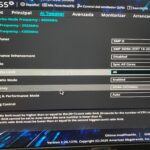
To enable PBO, enter your motherboard’s BIOS by pressing the Delete or F2 key during boot. Navigate to the overclocking or advanced CPU settings section and look for “Precision Boost Overdrive.” Change the setting from “Disabled” to “Enabled” or “Advanced.” In the advanced settings, you can adjust parameters like PPT (Package Power Tracking), TDC (Thermal Design Current), and EDC (Electrical Design Current) to allow the CPU to boost higher.
For the Ryzen 5 5600G, a good starting point for PBO limits is:
- PPT: 88W (default) to 120W
- TDC: 60A (default) to 80A
- EDC: 90A (default) to 120A
You can also use the “Motherboard” preset for these limits, which typically sets higher values than the default AMD specifications. This allows the CPU to boost more aggressively when thermal headroom is available.
PBO is the recommended overclocking method for most users because it provides a good performance boost while maintaining safety. The CPU will automatically reduce clocks and voltages if temperatures get too high, preventing damage.
For more details on enabling PBO through your BIOS, see our comprehensive guide on how to turn on PBO, which covers BIOS navigation for different motherboard manufacturers.
Method 2: Manual CPU Overclocking
Manual overclocking gives you direct control over the CPU’s clock speed and voltage. This method can potentially yield higher performance than PBO, but it requires more knowledge and carries more risk. With manual overclocking, you set a fixed frequency and voltage that the CPU maintains at all times, regardless of workload.
To manually overclock the Ryzen 5 5600G, enter the BIOS and navigate to the CPU ratio or core frequency setting. Start by increasing the ratio by one multiplier (e.g., from 44x to 45x for 4.5 GHz) and test for stability. If the system is stable, you can continue increasing the frequency in small increments.
For each frequency increase, you may need to increase the CPU core voltage (Vcore) to maintain stability. Start with a conservative voltage like 1.25V and increase in small increments (0.01V-0.025V) as needed. Monitor temperatures closely — the Ryzen 5 5600G should stay below 85°C under full load for safe, long-term operation.
A typical manual overclock for the Ryzen 5 5600G might reach 4.6-4.8 GHz all-core at 1.25V-1.35V, depending on the specific chip’s quality (known as the “silicon lottery”) and your cooling solution. Some chips can reach 4.9 GHz or higher with adequate cooling and voltage, while others may top out at 4.5 GHz.
Method 3: Integrated Graphics Overclock
The Ryzen 5 5600G features integrated Radeon Vega 7 graphics, which can also be overclocked for improved gaming performance. The iGPU runs at a default frequency of 1900 MHz, and overclocking it can provide a noticeable boost in frame rates for games that rely on the integrated graphics.
To overclock the iGPU, enter the BIOS and navigate to the integrated graphics settings. Look for the GPU frequency or iGPU clock setting and increase it in increments of 50 MHz. A typical stable overclock for the Vega 7 iGPU is between 2200 MHz and 2400 MHz, depending on your cooling and luck.
The iGPU shares the same cooling and power delivery as the CPU, so overclocking both simultaneously can be challenging. If you are overclocking both the CPU and iGPU, make sure your cooling solution can handle the combined heat output. It may be necessary to accept a slightly lower CPU overclock to maintain stability with an overclocked iGPU.
Memory speed has a significant impact on iGPU performance because the Vega 7 graphics use system memory as video memory. Faster RAM directly translates to better iGPU performance. This makes memory overclocking particularly important for systems using the integrated graphics.
Method 4: Memory and Infinity Fabric Overclock
Memory overclocking is one of the most effective ways to improve Ryzen 5000 series performance, especially for the 5600G where the iGPU depends on system memory bandwidth. The Ryzen 5 5600G officially supports DDR4-3200 memory, but most kits can run at higher speeds with proper tuning.
To overclock your memory, enter the BIOS and navigate to the memory or DRAM settings. Enable XMP (Extreme Memory Profile) or DOCP (Direct Overclock Profile for ASUS boards) to automatically apply the memory kit’s rated speed and timings. If you want to go beyond the rated speed, you can manually adjust the memory frequency, timings, and voltage.
The Infinity Fabric (FCLK) on the Ryzen 5 5600G runs at a 1:1 ratio with the memory controller by default. For DDR4-3600 memory, the FCLK runs at 1800 MHz, which is the sweet spot for most Ryzen 5000 processors. Going beyond DDR4-3600 may require loosening the 1:1 ratio, which can actually reduce performance in some workloads.
For the best iGPU performance, aim for DDR4-3600 with tight timings (CL16 or lower). This provides the optimal balance of frequency and latency for the integrated graphics.
Stability Testing
After making any overclocking changes, it is critical to test for stability to ensure your system can handle the new settings under sustained load. An unstable overclock can cause crashes, data corruption, and system damage.
CPU Stress Testing: Use tools like Prime95, AIDA64, or Cinebench to stress the CPU. Run the test for at least 30 minutes to an hour and monitor temperatures using HWiNFO64. If the system crashes or produces errors, reduce the frequency or increase the voltage slightly.
Memory Testing: Use MemTest86 or TestMem5 to test memory stability. Run the test overnight for the most thorough check. Memory errors can cause a wide range of issues, from application crashes to blue screens.
Gaming Tests: For iGPU overclocks, test stability by playing demanding games for an extended period. Watch for artifacts, stuttering, or crashes that might indicate an unstable overclock.
Monitoring: Keep HWiNFO64 running in the background while testing to monitor CPU temperatures, voltages, and clock speeds. Pay attention to thermal throttling, which occurs when the CPU reduces its clock speed to prevent overheating.
Thermal Management
Thermal management is critical for safe and effective overclocking. The Ryzen 5 5600G has a maximum operating temperature of 95°C, but for long-term reliability, you should aim to keep temperatures below 85°C under full load.
Here are some tips for managing temperatures during overclocking:
- Invest in a quality cooler: The stock Wraith Stealth cooler is adequate for stock settings but may not be sufficient for overclocking. A tower cooler or liquid cooler provides much better thermal performance.
- Apply quality thermal paste: High-quality thermal paste like Thermal Grizzly Kryonaut or Noctua NT-H1 can reduce temperatures by several degrees compared to the stock paste.
- Improve case airflow: Make sure your case has adequate intake and exhaust fans. Positive air pressure (more intake than exhaust) helps keep dust out and temperatures down.
- Consider undervolting: Interestingly, you can sometimes reduce voltage while maintaining the same clock speed, which lowers temperatures without sacrificing performance. This technique is called undervolting and is particularly effective on Ryzen processors.
If you want to learn more about reducing GPU temperatures to complement your CPU overclock, see our guide on how to lower GPU temp. If you are concerned about whether overclocking might void your warranty, check our article on does overclocking void warranty for AMD and Intel warranty policies.
Frequently Asked Questions
Is it safe to overclock the Ryzen 5 5600G?
Yes, the Ryzen 5 5600G is an unlocked processor designed for overclocking. As long as you keep temperatures within safe limits (below 85°C under load) and do not exceed recommended voltages (1.35V for daily use), overclocking is safe and will not void your warranty with AMD.
How much can I overclock the Ryzen 5 5600G?
Most Ryzen 5 5600G processors can reach 4.6-4.8 GHz all-core with manual overclocking, and up to 4.9-5.0 GHz on single-core boost with PBO and Curve Optimizer. The exact result depends on your cooling, motherboard quality, and the silicon quality of your specific chip.
What voltage should I use for overclocking?
Start with 1.25V and increase in small increments (0.01-0.025V) as needed for stability. Do not exceed 1.35V for daily use. The ideal voltage is the lowest value that provides stable operation at your target frequency.
Do I need a new motherboard to overclock?
You need a motherboard with an AMD B550 or X570 chipset to overclock the Ryzen 5 5600G. Budget A520 boards do not support CPU overclocking. Make sure your motherboard’s VRM is adequate for the increased power demands of an overclocked CPU.
What is the best cooler for overclocking the Ryzen 5 5600G?
A good tower cooler like the Noctua NH-D15, be quiet! Dark Rock Pro 4, or a 240mm-280mm AIO liquid cooler provides excellent thermal performance for overclocking. Avoid using the stock Wraith Stealth cooler for sustained overclocks.
How does overclocking affect the integrated GPU?
Overclocking the CPU does not directly affect the iGPU, but it increases overall heat output, which can limit how much you can overclock the iGPU. For best iGPU performance, focus on memory speed and iGPU frequency rather than CPU frequency.
What RAM speed is best for the Ryzen 5 5600G?
DDR4-3600 CL16 is the sweet spot for the Ryzen 5 5600G. This speed aligns with the Infinity Fabric’s optimal 1:1 ratio and provides excellent bandwidth for both CPU and iGPU workloads.
Can overclocking damage my CPU?
Modern CPUs like the Ryzen 5 5600G have built-in protections that prevent damage from thermal overload. However, running excessively high voltages (above 1.4V) for extended periods can degrade the CPU over time. Stay within recommended voltage limits for safe, long-term operation.