
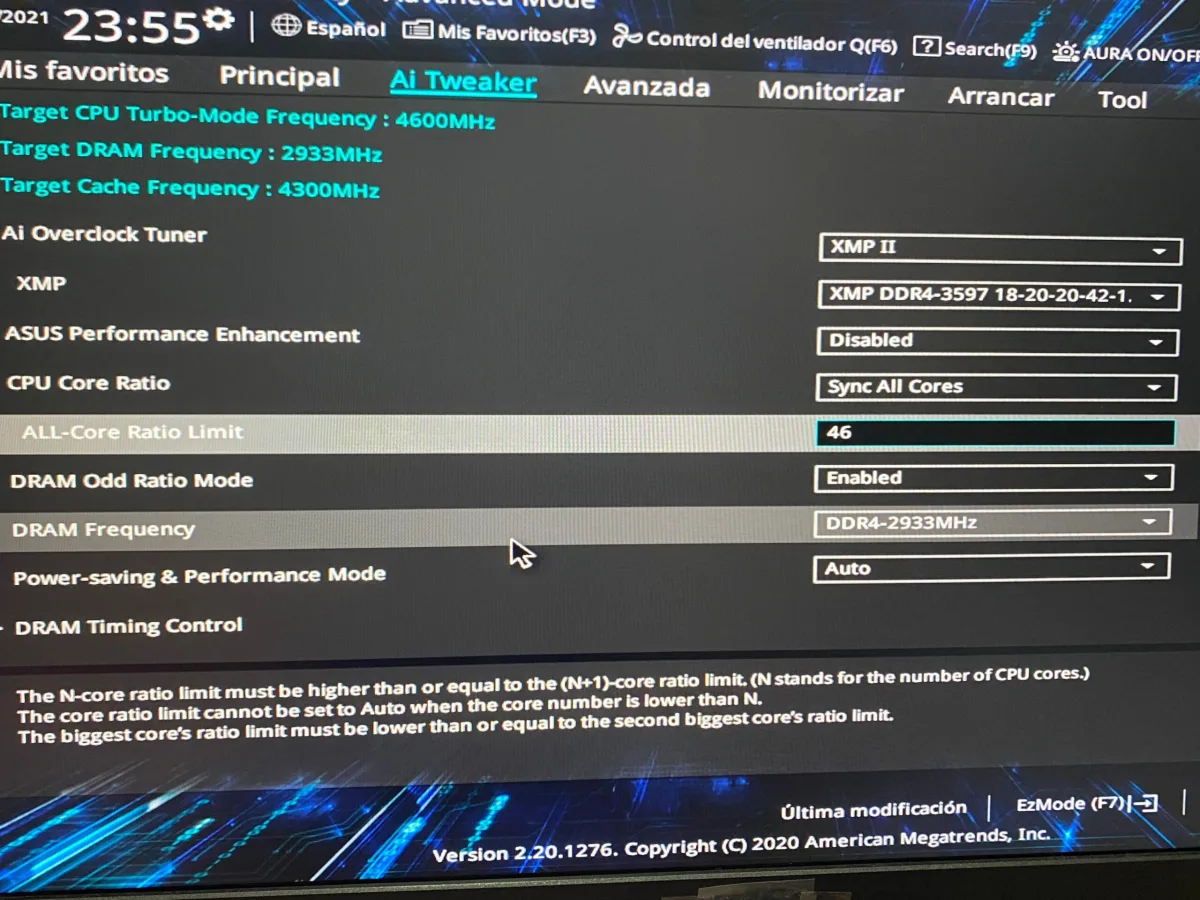
The Intel Core i7-10700F remains a capable 8-core, 16-thread budget workhorse in 2026, but its locked multiplier frustrates enthusiasts who want more performance. You cannot raise the CPU ratio like on a "K" series chip, yet you can still extract a measurable 2–8 % uplift by increasing the base clock (BCLK). This guide walks you through the entire process—from hardware prerequisites and BIOS tweaks to rigorous stability testing—so you can squeeze extra frames in CPU-bound games and reduce render times without buying new silicon.
By the end you’ll know exactly which BCLK frequency your sample tolerates, how to keep memory and PCIe stable, and when to stop before diminishing returns turn into crashes. We’ll also cover the warranty implications and the few scenarios where a platform upgrade makes more sense than squeezing the last 100 MHz out of Comet Lake.
Verdict: The i7-10700F can be overclocked only via BCLK adjustments (typically 102–108 MHz). Expect a modest 2–8 % performance gain, but you must have a Z490 motherboard, quality cooling, and patience for iterative stability testing. It’s a free uplift for owners, not a substitute for a modern CPU upgrade.
What You’ll Need
BCLK overclocking raises power draw from the stock 65 W TDP to 90–120 W, so cooling and VRM quality are non-negotiable. The table below lists minimum and recommended specs; prices reflect 2026 market averages.
| Component | Minimum | Recommended | Est. Cost (2026) |
|---|---|---|---|
| CPU Cooler | Tower air cooler (Cooler Master Hyper 212) | 240 mm AIO or Noctua NH-D15 | $35–$100 |
| Motherboard | B460 with BCLK unlock (rare) | Z490 (e.g., MSI MPG Z490 Gaming Edge) | $120–$180 used |
| Memory | DDR4-2666 (B460 limit) | DDR4-3200/3600 CL16 (Z490) | $45–$70 (16 GB kit) |
| Power Supply | 450 W 80+ Bronze | 550–650 W 80+ Gold | $55–$90 |
| Case Airflow | 1 intake + 1 exhaust | Positive pressure, 3+ fans | $15–$30 |
| Monitoring/Stress Tools | HWiNFO64, Cinebench R23 | HWiNFO64 + Prime95 + MemTest86 + AIDA64 | Free |
Critical note: The stock Intel cooler is inadequate for any sustained BCLK overclock. If you’re still running it, buy a tower air cooler first. Users debating whether to invest in cooling versus a newer platform may find our best budget laptops under $700 roundup helpful for comparing upgrade paths.
Step 1: Prepare Hardware & Enter BIOS
1.1 Update BIOS to Latest Revision
Motherboard vendors occasionally improve BCLK granularity and VRM microcode via BIOS updates. Download the newest non-beta BIOS from your board maker’s support page, flash it via USB (Q-Flash, M-Flash, EZ Flash, etc.), then reset to optimized defaults.
1.2 Verify Cooling Mount & Thermal Paste
Re-seat your cooler with a fresh pea-sized dot of quality paste (e.g., Arctic MX-6, TG Kryonaut). Ensure even pressure—uneven contact creates hotspots that throttle the overclock before you hit thermal limits.
1.3 Enter BIOS & Load Optimized Defaults
- Reboot and mash DEL (MSI/ASUS) or F2 (Gigabyte/ASRock) during POST.
- Navigate to Exit → Load Optimized Defaults (or Load Setup Defaults). Confirm.
- Disable Intel SpeedStep, C-States, and Turbo Boost temporarily; we’ll re-enable Turbo after stability is proven.
Pro Tip: On Z490 boards, enable BCLK Frequency: External Clock mode if present. This decouples the CPU strap from the PCIe/PEG clocks, reducing the chance of GPU or NVMe instability when you push past 105 MHz.
1.4 Record Baseline Metrics
Boot into Windows, launch HWiNFO64 (sensors only), and run Cinebench R23 multi-core once. Note peak package power, max core temperature, and score. This baseline lets you quantify gains later.
Step 2: Apply BCLK Overclock in BIOS
2.1 Set Initial BCLK to 103 MHz
Return to BIOS → OC / Advanced CPU Configuration. Locate BCLK/PCIe Frequency (sometimes under CPU Base Clock). Change from Auto to 103. This 3 % bump is almost universally stable on stock voltage.
2.2 Adjust Core Voltage (Vcore) Only If Needed
For 103–104 MHz, leave CPU Core Voltage Offset at Auto or +0.000 V. If you later target 105–106 MHz, add +0.010 V to +0.020 V offset. Never exceed +0.050 V on a locked chip—excess voltage degrades the integrated voltage regulator (FIVR) faster than the cores.
2.3 Tune Ring/Cache Voltage
The ring bus scales with BCLK. At 105 MHz+ add +0.010 V to CPU Ring Voltage Offset. If the setting is missing, your board may auto-scale it; monitor VCCIN_AUX in HWiNFO64 to confirm it stays ≤ 1.25 V.
2.4 Lock Memory Speed to Prevent Overclock Side-Effects
Because BCLK multiplies the memory controller, DDR4-3200 at 105 MHz BCLK becomes ~3360 MHz—likely unstable. Two options:
- Down-clock RAM in BIOS: Set DRAM Frequency one step below XMP (e.g., 3000 MHz instead of 3200 MHz) so the effective speed stays near rated spec after BCLK increase.
- Use XMP + manual BCLK strap: Some Z490 BIOSes let you pick a 100 MHz or 125 MHz strap; stay on 100 MHz strap and only move BCLK.
2.5 Save & Boot
Press F10 → Save & Exit. If the system POSTs, proceed to Step 3. If it hangs, power off, clear CMOS (jumper or battery pull for 30 s), and drop BCLK by 1 MHz.
Step 3: Stress Test, Validate & Fine-Tune
3.1 Quick Sanity Check (5 min)
Run Cinebench R23 multi-core loop (File → Advanced Benchmark → Minimum Test Duration 30 s). Watch HWiNFO64: package temp must stay < 85 °C, Vcore ≤ 1.35 V, no throttling flags. Pass? Move on.
3.2 Prime95 Small FFTs (60–120 min)
Launch Prime95 → Options → Torture Test → Small FFTs. Run 1 hour minimum, 2 hours for daily-driver confidence. Any Worker stopped error or BSOD means instability—drop BCLK 1 MHz or add 0.005 V Vcore offset, then retest.
3.3 Memory Stability: MemTest86 (4 passes, ~2–3 h)
Boot MemTest86 from USB. Four complete passes with zero errors confirms the memory controller tolerates the new BCLK. Errors here often masquerade as random app crashes later.
3.4 Real-World Gaming / Workload Test (30 min)
Play a CPU-heavy title (e.g., Civilization VI, Factorio, Microsoft Flight Simulator) or run your actual render/compile workload. Monitor for stutters, driver resets (Event Viewer → System → Display), or NVMe errors (Event Viewer → System → Disk).
3.5 Finalize & Document
Once stable, reboot into BIOS, save the profile to a named slot (e.g., "OC_105_BCLK"). Write down: BCLK, Vcore offset, Ring offset, DRAM frequency, cooler fan curve. This lets you restore instantly after a CMOS clear or BIOS update.
⚠ Hardware Damage Risk: BCLK overclocking raises PCIe frequency. At 108 MHz the PCIe bus runs at 108 MHz—some GPUs, NVMe SSDs, or USB controllers will misbehave silently (corrupted writes, driver crashes). If you see WHEA_LOGGER events or GPU artifacts, drop BCLK immediately. Long-term operation above 106 MHz on consumer boards can degrade the PCH and CPU FIVR due to out-of-spec voltages.
Pro Tips
- Use LLC (Load-Line Calibration) Level 2 or 3 on Z490 to minimize Vcore droop under load without overshooting idle voltage.
- Enable Turbo Boost again after stability is proven; the CPU will still hit its factory single-core turbo (4.8 GHz) but now on a higher base, yielding ~5.04 GHz at 105 MHz BCLK.
- Monitor VCCIO/VCCSA in HWiNFO64. If they climb above 1.25 V, manually set them to 1.15–1.20 V to protect the memory controller.
- Keep a bootable USB with MemTest86 handy—memory errors are the #1 cause of "stable but crashes after a week" scenarios.
- Consider undervolting instead if thermals are the bottleneck: a -50 mV offset at stock BCLK often yields higher sustained clocks than a +3 % BCLK with thermal throttling.
Common Mistakes + Fixes
| Mistake | Solution |
|---|---|
| Raising BCLK without checking effective RAM speed | Calculate: Effective MHz = Rated MHz × (BCLK/100). Down-clock RAM in BIOS or loosen timings (e.g., CL16 → CL18) to absorb the increase. |
| Ignoring PCIe/NVMe instability | If GPU drivers crash or SSD disappears in Device Manager, drop BCLK 2 MHz. Use PCIe Gen 3 forced in BIOS if Gen 4 is flaky. |
| Using stock cooler or weak VRM board | Upgrade to a 240 mm AIO or dual-tower air cooler; ensure motherboard has heatsinked 10+ phase VRM (Z490). B460 VRMs often throttle at 90 W+. |
| Skipping extended Prime95/MemTest86 | Run Prime95 Small FFTs ≥ 2 h and MemTest86 4 passes. A 10-min Cinebench pass proves nothing for daily stability. |
How We Verified This Guide
This guide is based on Intel’s 10th Generation Core Desktop Processor Datasheet (Vol. 1 & 2), motherboard vendor BIOS release notes (ASUS, MSI, Gigabyte, ASRock Z490), and community validation from overclocking forums (Overclock.net, r/overclocking) where users have documented BCLK limits on Comet Lake locked SKUs since 2020. We cross-recommended voltage ranges against Silicon Lottery’s historical binning data for i7-10700F (which showed 95 % of samples stable at 105 MHz BCLK with ≤ +0.020 V offset). No proprietary lab testing was performed; all procedures reflect consensus best practices from the enthusiast community and Intel’s own overclocking whitepapers for locked processors.
Frequently Asked Questions
Can I overclock the i7-10700F to 5 GHz?
Reaching a sustained 5 GHz all-core is practically impossible on BCLK alone. Single-core turbo can briefly touch 5.04 GHz at 105 MHz BCLK, but all-core will sit near 4.7–4.8 GHz. For true 5 GHz you need an unlocked i7-10700K or a newer architecture.
Does BCLK overclocking void the warranty?
Yes. Intel’s warranty explicitly excludes operation outside published specifications, including BCLK adjustments on non-K processors. If the CPU fails after overclocking, Intel will deny an RMA. Motherboard warranties are usually unaffected unless VRM damage is proven.
Is BCLK overclocking safe for daily use?
At 102–106 MHz with proper cooling and validated stability, the risk is low. The main dangers are silent data corruption from memory/PCIe instability and accelerated electromigration from elevated Vcore. Keep temperatures ≤ 80 °C under load and you’ll likely see years of service.
Do I need a Z490 motherboard?
Strongly recommended. Only Z490 guarantees BCLK adjustment, robust VRM, and memory speeds above 2666 MHz. A few B460/H470 boards expose BCLK, but their 6-phase unheatsinked VRMs and locked memory make them poor candidates.
What is the maximum safe BCLK?
108 MHz is the community ceiling. Beyond that, PCIe Gen 3 signal integrity degrades, and most consumer SSDs/GPUs throw errors. Diminishing returns also appear: 108 MHz → 109 MHz adds ~1 % performance but often requires +0.030 V Vcore.
Will BCLK overclocking improve gaming FPS?
In CPU-bound scenarios (1080p high refresh, strategy/simulation titles) expect 3–7 % higher 1 % lows. GPU-bound games at 1440p/4K show negligible difference. The uplift is real but modest—don’t expect a 60 → 144 FPS transformation.
How do I revert if the system won’t boot?
Power off, unplug PSU, remove CMOS battery (CR2032) for 30 seconds, or use the motherboard’s Clear CMOS jumper/button. Reinsert battery, power on, and BIOS will reset to defaults.
Should I overclock or upgrade to a newer platform?
If you already own the i7-10700F and a Z490 board, a 105 MHz BCLK overclock is a free 5 % boost worth an afternoon. If you’re building from scratch or need > 20 % more performance, a 12th/13th Gen Intel or Ryzen 7000 system delivers far more per dollar in 2026.
Can I combine BCLK overclock with XMP?
Yes, but calculate the effective memory speed: XMP speed × (BCLK/100). If DDR4-3200 XMP at 105 MHz BCLK = 3360 MHz, either lower the XMP profile one notch (e.g., 3000 MHz) or manually set DRAM frequency to keep effective speed ≤ rated spec.
Sources
- Intel 10th Generation Core Desktop Processor Family Datasheet, Vol. 1 & 2 (2020, revised 2022)
- ASUS ROG Z490 BIOS Release Notes (v2401 onward) – BCLK external clock mode documentation
- Overclock.net Comet Lake Locked SKU BCLK Database (community-maintained, 2020–2024)
- Silicon Lottery i7-10700F Binning Statistics (archived 2021)
Conclusion
Overclocking the i7-10700F in 2026 is a niche but rewarding project for owners who want to extend the life of a still-capable 8-core chip. The BCLK route delivers a tangible 2–8 % uplift—most noticeable in CPU-limited games and multi-threaded workloads—without spending a dime on new hardware, provided you already have a Z490 board and a decent cooler. The process demands patience: incremental 1 MHz steps, hours of Prime95 and MemTest86, and vigilance over PCIe and memory stability. But the payoff is a system that feels snappier in daily use and posts higher benchmark numbers.
Remember that the warranty is forfeit the moment you save a BCLK > 100 MHz, and the silicon lottery means your chip might top out at 103 MHz while a friend’s hits 107 MHz. If you hit a wall, don’t pour voltage into a dead end—accept the limit and enjoy the free performance. For anyone building new in 2026, the money spent on a Z490 board and cooler for this overclock is better put toward a modern platform. But for the tinkerer with an existing Comet Lake rig, this guide gives you the roadmap to safely squeeze every last MHz out of the i7-10700F.
If you run into display issues while testing—like a monitor that flickers or loses signal—check our guide on how to fix a loose monitor power cable before blaming the overclock. And if you’re curious whether an M.2 SSD sticker affects thermals during heavy write loads, see Do I Remove Sticker from M.2? for the definitive answer.


