How to Install RGB Fusion 2.0 (2026 Complete Guide)
Last updated: July 19, 2026 | Estimated reading time: 14 minutes
RGB Fusion 2.0 is Gigabyte’s proprietary software for controlling RGB lighting on compatible motherboards, graphics cards, RAM modules, and other peripherals. If you have a Gigabyte motherboard or other RGB Fusion-compatible hardware, installing RGB Fusion 2.0 gives you full control over your system’s lighting effects, colors, and patterns. In this comprehensive guide, we will walk you through the complete installation process for RGB Fusion 2.0 in 2026, including system requirements, step-by-step installation instructions, configuration tips, troubleshooting common issues, and how to sync RGB Fusion with other lighting software for a unified aesthetic across all your components.
Table of Contents
- What Is RGB Fusion 2.0?
- Compatibility and System Requirements
- Downloading RGB Fusion 2.0
- Step-by-Step Installation
- First Launch and Setup
- Configuring RGB Lighting
- Syncing with Other RGB Software
- Troubleshooting Common Issues
- Frequently Asked Questions
What Is RGB Fusion 2.0?
RGB Fusion 2.0 is Gigabyte’s updated RGB lighting control software that replaced the original RGB Fusion. It provides a centralized interface for managing all RGB lighting in your PC, including motherboard LEDs, case fans, RAM modules, graphics cards, LED strips, and compatible peripherals from other manufacturers.
The software offers a wide range of lighting effects, including static colors, breathing, flashing, cycling, and more complex patterns. You can synchronize lighting across all compatible devices or control each device independently. RGB Fusion 2.0 also supports addressable RGB (ARGB) headers, which allow individual LED control for more sophisticated lighting effects.
One of the key improvements of RGB Fusion 2.0 over the original is better compatibility with third-party hardware, improved stability, and more advanced customization options. The software is free to download and use with compatible Gigabyte hardware.
Compatibility and System Requirements
Before installing RGB Fusion 2.0, make sure your system meets the following requirements:
| Requirement | Details |
|---|---|
| Operating System | Windows 10 (version 1903 or later) or Windows 11 |
| Motherboard | Gigabyte motherboard with RGB Fusion support |
| RAM | 4GB minimum (8GB recommended) |
| Storage | 500MB free disk space |
| Internet | Required for download and updates |
| Compatible Hardware | Gigabyte Aorus motherboards, select Gigabyte GPUs, compatible RAM and peripherals |
RGB Fusion 2.0 is compatible with most Gigabyte and Aorus motherboards released in the last several years. Check Gigabyte’s website for a complete list of compatible motherboards. Third-party hardware compatibility varies — some Corsair, Kingston, and G.Skill RAM modules are supported, as are some Cooler Master and other brand peripherals.
Downloading RGB Fusion 2.0
To download RGB Fusion 2.0, follow these steps:
Step 1: Visit the Gigabyte Website
Go to the Gigabyte official website and navigate to the Support section. You can either search for your specific motherboard model or browse the utility downloads section.
Step 2: Find Your Motherboard Model
Enter your motherboard model number in the search bar. The model number is printed on the motherboard itself or can be found in the Windows System Information tool (msinfo32) under “BaseBoard Product.”
Step 3: Download RGB Fusion 2.0
On your motherboard’s support page, look for the “Utility” or “Software” section. Find “RGB Fusion 2.0” in the list and click the download button. The download should start automatically.
Step 4: Verify the Download
Make sure you are downloading the latest version of RGB Fusion 2.0. Gigabyte regularly updates the software to add compatibility for new hardware and fix bugs. The latest version will provide the best experience.
Alternative Download Source: You can also download RGB Fusion 2.0 from the Gigabyte App Center, which is a unified utility manager for all Gigabyte software. The App Center can automatically detect your hardware and recommend the appropriate software packages.
Step-by-Step Installation
Once you have downloaded RGB Fusion 2.0, follow these steps to install it:
Step 1: Close Other RGB Software
Before installing RGB Fusion 2.0, close any other RGB lighting software running on your system, such as Corsair iCUE, Razer Synapse, or MSI Mystic Light. Running multiple RGB control programs simultaneously can cause conflicts and instability.
Step 2: Run the Installer
Locate the downloaded RGB Fusion 2.0 installer file (usually a .exe or .zip file) and double-click to run it. If the file is in a .zip archive, extract it first and then run the installer executable.
Step 3: Accept the License Agreement
Read and accept the software license agreement. Review the installation options and choose the default installation directory unless you have a specific reason to change it.
Step 4: Complete the Installation
Follow the on-screen prompts to complete the installation. The installer will copy files, create shortcuts, and configure the necessary system settings. This process typically takes 1-2 minutes.
Step 5: Restart Your Computer
After the installation completes, restart your computer. This ensures that all the necessary drivers and services are properly loaded. RGB Fusion 2.0 needs to initialize its hardware detection during the boot process.
First Launch and Setup
After restarting your computer, launch RGB Fusion 2.0 from the desktop shortcut or Start menu. On the first launch, the software will scan your system for compatible RGB devices and initialize the lighting controller.
Device Detection:
RGB Fusion 2.0 should automatically detect all compatible RGB devices connected to your system, including:
- Motherboard RGB headers and onboard LEDs
- Compatible RAM modules with RGB lighting
- Gigabyte or Aorus graphics cards with RGB lighting
- Connected LED strips on RGB or ARGB headers
- Compatible peripherals (mice, keyboards, headsets)
If some devices are not detected, try the following troubleshooting steps:
- Make sure all RGB cables are properly connected to the correct headers on the motherboard.
- Check that the device drivers are installed and up to date.
- Restart RGB Fusion 2.0 or restart your computer.
- Reinstall RGB Fusion 2.0 if the problem persists.
Interface Overview:
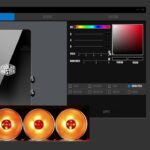
The RGB Fusion 2.0 interface is divided into several sections. The main screen shows all detected devices and their current lighting state. You can click on individual devices to customize their lighting or use the sync feature to control all devices simultaneously.
Configuring RGB Lighting
Once RGB Fusion 2.0 is installed and your devices are detected, you can customize the lighting in several ways:
Static Color: Set all devices to a single, static color. This is the simplest option and provides a clean, uniform look. Choose any color from the color picker or enter a specific RGB value.
Breathing Effect: The lighting gently fades in and out, creating a pulsing effect. You can adjust the speed of the breathing effect and the color used.
Flashing Effect: The lighting alternates between on and off states. You can control the flash speed and the color used.
Cycling Effect: The lighting smoothly transitions through the entire color spectrum. This creates a rainbow effect that is popular among RGB enthusiasts.
Music Sync: RGB Fusion 2.0 can sync the lighting to audio output from your system. The lights will react to the beat and frequency of the music, creating a dynamic visual experience.
Temperature Sync: Some configurations allow the lighting color to change based on CPU or GPU temperature. For example, the lights might be blue when the system is cool and transition to red as temperatures increase.
Custom Profiles: Save your lighting configurations as profiles that you can quickly switch between. This is useful if you want different lighting setups for gaming, work, and media consumption.
For more information about controlling RAM RGB lighting specifically, see our guide on how to change G.Skill RAM color, which covers G.Skill’s own RGB control software as an alternative to RGB Fusion.
Syncing with Other RGB Software
One of the challenges of RGB lighting is that different manufacturers use different software ecosystems. Gigabyte’s RGB Fusion, Corsair’s iCUE, Razer’s Synapse, and MSI’s Mystic Light all control their respective hardware independently. However, there are ways to achieve synchronization across different ecosystems.
RGB Fusion Third-Party Support:
RGB Fusion 2.0 includes some third-party device support, allowing it to control compatible devices from other manufacturers. Check the RGB Fusion device list to see if your third-party hardware is supported.
OpenRGB:
OpenRGB is an open-source RGB lighting control software that aims to provide a unified interface for all RGB devices regardless of manufacturer. It supports devices from Gigabyte, Corsair, Razer, MSI, and many other brands. OpenRGB can be used as an alternative to or alongside manufacturer-specific software.
SignalRGB:
SignalRGB is another popular third-party RGB control software that provides extensive device support and advanced lighting effects. It can control RGB Fusion-compatible devices alongside hardware from other manufacturers, providing a truly unified lighting experience.
Limitations:
It is important to note that running multiple RGB control programs simultaneously can cause conflicts. If you use a third-party tool like OpenRGB or SignalRGB, you may need to disable or uninstall the manufacturer-specific software to avoid conflicts.
For information about how RGB lighting affects system performance, see our article on does RGB affect performance. If you have Cooler Master RGB fans, our guide on how to change Cooler Master RGB fan color provides specific instructions for those devices.
Troubleshooting Common Issues
RGB Fusion 2.0 Not Detecting Devices:
If RGB Fusion 2.0 is not detecting your RGB devices, first check that the devices are properly connected to the correct RGB headers on the motherboard. Make sure you are using the right header type — 12V 4-pin for standard RGB and 5V 3-pin for addressable RGB. Using the wrong header type can damage the devices.
Software Crashes or Freezes:
RGB Fusion 2.0 is known for occasional stability issues. If the software crashes or freezes, try updating to the latest version, running as administrator, or reinstalling the software. Make sure no other RGB software is running in the background.
Lighting Not Changing:
If the lighting does not respond to changes in RGB Fusion 2.0, verify that the RGB cables are securely connected. Try a different RGB header if available. Some devices may require a firmware update to work with RGB Fusion 2.0.
Conflict with Other Software:
If you experience conflicts between RGB Fusion 2.0 and other RGB software, disable or uninstall the conflicting software. You may need to use only one RGB control program at a time for reliable operation.
Performance Issues:
Some users report that RGB Fusion 2.0 can cause performance issues, particularly on systems with many RGB devices. If you notice reduced performance after installing RGB Fusion, try disabling unnecessary lighting effects or using a lighter third-party alternative like OpenRGB.
Frequently Asked Questions
Is RGB Fusion 2.0 free to download?
Yes, RGB Fusion 2.0 is completely free to download and use. It is available from the Gigabyte support website for compatible motherboards.
Does RGB Fusion 2.0 work with non-Gigabyte motherboards?
No, RGB Fusion 2.0 is designed specifically for Gigabyte and Aorus motherboards. For non-Gigabyte motherboards, you will need to use the RGB software from your motherboard’s manufacturer, or a third-party tool like OpenRGB or SignalRGB.
Can RGB Fusion 2.0 control Corsair or G.Skill RGB RAM?
RGB Fusion 2.0 has limited support for third-party RGB RAM. Some Corsair and G.Skill modules are compatible, but for full control, you may need to use the manufacturer’s own software (Corsair iCUE or G.Skill Trident Z Lighting Control).
Why does RGB Fusion 2.0 use so much CPU?
RGB Fusion 2.0 is known for higher than expected resource usage. If you experience performance issues, try updating to the latest version, disabling advanced effects, or switching to a lighter alternative like OpenRGB.
Can I sync RGB Fusion with MSI Mystic Light?
RGB Fusion and Mystic Light are separate ecosystems and cannot natively sync with each other. To achieve cross-brand synchronization, use a third-party tool like OpenRGB or SignalRGB that supports both ecosystems.
How do I update RGB Fusion 2.0?
Visit the Gigabyte support website and download the latest version of RGB Fusion 2.0 for your motherboard. Alternatively, if you have the Gigabyte App Center installed, it can automatically check for and install updates.
What happens if I uninstall RGB Fusion 2.0?
Uninstalling RGB Fusion 2.0 will not affect your system’s functionality, but your RGB lighting will revert to its default state (usually static white or the last saved setting). You can reinstall the software at any time to regain control of your lighting.