How Many SSDs Can a Motherboard Have (2026 Complete Guide)
Understanding how many SSDs your motherboard can support is crucial for planning storage upgrades and ensuring your system meets your needs. The answer depends on several factors, including your motherboard’s form factor, chipset, and the types of SSD slots available. Modern motherboards in 2026 typically support anywhere from two to eight or more SSDs, with the exact number varying significantly between different models and form factors. This comprehensive guide covers everything you need to know about SSD compatibility, slot types, and how to maximize your motherboard’s storage capacity in 2026.
Last updated: July 19, 2026 | Estimated reading time: 14 minutes
Table of Contents
- Understanding M.2 NVMe vs SATA SSDs
- How Many Slots Does Your Motherboard Have
- Form Factor Differences: ATX vs Micro-ATX vs Mini-ITX
- Chipset Limitations and PCIe Lanes
- SATA Ports and Their Limitations
- M.2 Slot Configurations
- How to Check Your Motherboard’s SSD Capacity
- Expanding Storage Beyond Built-in Slots
- Frequently Asked Questions
Understanding M.2 NVMe vs SATA SSDs
Before determining how many SSDs your motherboard can support, it is important to understand the different types of SSDs available and how they connect to your system. The two primary types are M.2 NVMe SSDs and SATA SSDs, each with distinct characteristics and connection requirements.
M.2 NVMe SSDs
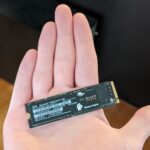
M.2 NVMe SSDs are the fastest consumer storage devices available in 2026, offering read speeds of 5,000-14,000 MB/s and write speeds of 4,000-12,000 MB/s. These drives connect through M.2 slots on the motherboard and use the PCIe interface to communicate directly with the CPU. NVMe SSDs are the preferred choice for operating systems, applications, and any workload that benefits from fast storage access.
M.2 NVMe SSDs come in different physical sizes, with the most common being 2280 (22mm wide, 80mm long). Some motherboards also support other sizes like 2242, 2260, and 22110, though 2280 is the standard for most consumer builds. Always check your motherboard’s specifications for supported M.2 sizes before purchasing drives.
SATA SSDs
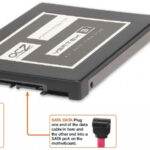
SATA SSDs connect through SATA ports on the motherboard and use the SATA III interface, which provides maximum speeds of approximately 600 MB/s. While significantly slower than NVMe drives, SATA SSDs are still much faster than traditional hard drives and are excellent for bulk storage, media libraries, and secondary drives.
SATA SSDs come in 2.5-inch form factors that fit in standard drive bays, making them compatible with virtually any desktop case. They are also typically less expensive per gigabyte than NVMe drives, making them a cost-effective choice for large storage needs where maximum speed is not essential.
| Feature | M.2 NVMe | SATA SSD |
|---|---|---|
| Max Speed | 14,000 MB/s | 600 MB/s |
| Connection | PCIe via M.2 slot | SATA III cable |
| Form Factor | M.2 2280 (most common) | 2.5 inch |
| Cost per GB | $0.08-0.15 | $0.05-0.10 |
How Many Slots Does Your Motherboard Have
The number of SSD slots on your motherboard depends on its form factor, chipset, and manufacturer’s design choices. Understanding these factors helps you determine your system’s storage capacity and plan upgrades accordingly.
Typical Slot Counts by Form Factor
ATX motherboards, the most common form factor for desktop builds, typically offer the most storage options. A high-end ATX board may include 3-4 M.2 slots and 6-8 SATA ports, allowing for a total of 9-12 SSDs. Mid-range ATX boards typically offer 2-3 M.2 slots and 4-6 SATA ports, for a total of 6-9 SSDs.
Micro-ATX boards are smaller than ATX but still provide adequate storage options for most builds. A typical Micro-ATX board includes 1-2 M.2 slots and 4-6 SATA ports, for a total of 5-8 SSDs. These boards are popular for compact builds that still need significant storage capacity.
Mini-ITX boards are the smallest consumer form factor and have the most limited storage options. A typical Mini-ITX board includes 1-2 M.2 slots and 2-4 SATA ports, for a total of 3-6 SSDs. While this is fewer than larger form factors, it is still sufficient for most users who do not need extensive storage arrays.
Manufacturer Variations
Different motherboard manufacturers may offer different slot configurations even for boards with the same chipset and form factor. Some manufacturers prioritize M.2 slots for NVMe drives, while others provide more SATA ports for traditional SSDs and hard drives. Check your specific motherboard’s specifications to determine its exact storage configuration.
Premium motherboards from manufacturers like ASUS, MSI, Gigabyte, and ASRock often include additional storage features like U.2 ports, SATA Express ports, or M.2 heatsinks. These features can expand your storage options beyond the basic slot count and may provide better performance for high-end NVMe drives.
Form Factor Differences: ATX vs Micro-ATX vs Mini-ITX
The form factor of your motherboard significantly impacts the number of SSDs it can support. Understanding these differences helps you choose the right motherboard for your storage needs.
ATX Form Factor
ATX motherboards measure 305mm x 244mm and provide the most space for storage connectors. The larger physical size allows manufacturers to include more M.2 slots, SATA ports, and other storage-related components. ATX boards are the standard for full-tower and mid-tower cases and are the best choice for builds that require extensive storage.
High-end ATX motherboards can support up to 4 M.2 NVMe slots and 8 SATA ports, providing a total of 12 storage devices. Some enthusiast-grade ATX boards may include additional storage options like U.2 ports for enterprise NVMe drives or dual M.2 slots with RAID support for maximum performance.
Micro-ATX Form Factor
Micro-ATX motherboards measure 244mm x 244mm and provide a good balance between size and features. While smaller than ATX, Micro-ATX boards still offer adequate storage options for most builds. The reduced size means fewer expansion slots and connectors, but most Micro-ATX boards include at least two M.2 slots and four SATA ports.
Micro-ATX is a popular choice for builders who want a compact system without sacrificing too many features. For storage, Micro-ATX boards can typically support 6-8 SSDs, which is more than sufficient for most users. The smaller size also makes Micro-ATX boards compatible with a wider range of cases, including compact mid-towers and some small form factor cases.
Mini-ITX Form Factor
Mini-ITX motherboards measure 170mm x 170mm and are designed for the most compact builds. The small size severely limits the number of storage connectors, with most Mini-ITX boards including only 1-2 M.2 slots and 2-4 SATA ports. This limits total storage to 3-6 SSDs, which is still adequate for many users but may not be sufficient for storage-intensive applications.
Mini-ITX boards are ideal for HTPCs, small gaming rigs, and compact workstations where space is at a premium. While the storage options are limited, they provide enough capacity for an operating system drive and one or two additional storage drives. For users who need more storage, external solutions like USB enclosures or NAS devices can supplement the internal storage.
Chipset Limitations and PCIe Lanes
Your motherboard’s chipset plays a crucial role in determining how many SSDs it can support. The chipset provides the PCIe lanes and SATA controllers that connect storage devices to the CPU, and different chipsets offer different capabilities.
Intel Chipsets
Intel’s consumer chipsets, including the Z790, B760, H770, and others, provide varying numbers of PCIe lanes and SATA ports. The Z790 chipset, Intel’s flagship for mainstream desktops, provides up to 24 PCIe lanes and supports multiple M.2 NVMe drives. The B760 chipset, a more affordable option, provides fewer PCIe lanes but still supports 2-3 M.2 slots and 4 SATA ports.
Intel’s chipset lane allocation varies between configurations, with some lanes dedicated to M.2 slots, others to SATA controllers, and still others to other devices like network adapters and audio codecs. Understanding your specific chipset’s lane allocation helps you determine the maximum number of storage devices your system can support.
AMD Chipsets
AMD’s consumer chipsets, including the X670E, B650, X570, and B550, also provide varying storage capabilities. The X670E chipset, AMD’s flagship for AM5 processors, provides extensive PCIe lane support and can accommodate multiple M.2 NVMe drives. The B650 chipset offers a balance of features and affordability, typically supporting 2-3 M.2 slots and 4-6 SATA ports.
AMD’s Ryzen processors also provide PCIe lanes directly from the CPU, in addition to the lanes provided by the chipset. This CPU-direct connection is typically used for the primary M.2 slot, providing the highest possible performance for your boot drive. Additional M.2 slots are usually connected through the chipset, which may offer slightly lower performance due to the additional hop through the chipset.
Lane Sharing and Limitations
Many motherboards share PCIe lanes between different devices, which can limit the number of simultaneous storage connections. For example, using a SATA M.2 drive may disable one or two SATA ports, or using a specific M.2 slot may reduce the number of available PCIe lanes for other devices. Check your motherboard’s manual for information about lane sharing and its impact on storage options.
Lane sharing is particularly common on smaller form factor boards where physical space limits the number of available connections. Understanding these limitations helps you plan your storage configuration and avoid conflicts between devices.
SATA Ports and Their Limitations
SATA ports provide the connection for 2.5-inch SATA SSDs and traditional hard drives. Understanding the capabilities and limitations of SATA ports helps you plan your storage configuration effectively.
Number of SATA Ports
Most consumer motherboards include 4-8 SATA ports, though the exact number depends on the chipset and form factor. ATX boards typically include 6-8 SATA ports, while Micro-ATX boards may include 4-6, and Mini-ITX boards usually include 2-4. These ports support both SATA SSDs and SATA hard drives, allowing you to mix different storage types.
SATA ports are backward compatible, meaning you can use SATA III drives in SATA II ports (at reduced speed) and vice versa. However, for maximum performance, ensure your SATA SSDs are connected to SATA III ports, which provide the full 600 MB/s bandwidth that SATA SSDs can utilize.
SATA Port Limitations
SATA ports have several limitations that affect storage configuration. The most significant is bandwidth sharing, where multiple SATA ports share a single SATA controller. This means that connecting many devices simultaneously may reduce the available bandwidth for each device, though this is rarely an issue for typical consumer workloads.
Some SATA ports may also be disabled when certain M.2 slots are in use, as they share bandwidth or PCIe lanes. This is particularly common on smaller motherboards where physical space and chipset limitations require sharing resources between different types of connections. Always check your motherboard’s manual to understand which SATA ports are affected by M.2 usage.
M.2 Slot Configurations
M.2 slots are the primary connection method for modern NVMe SSDs, and understanding their configurations helps you maximize your motherboard’s storage potential.
PCIe Generations
M.2 slots can support different PCIe generations, which affects the maximum speed of connected NVMe drives. PCIe 4.0 slots provide up to 8,000 MB/s per lane, while PCIe 5.0 slots can reach up to 16,000 MB/s per lane. Most M.2 slots use four PCIe lanes, providing maximum speeds of 32,000 MB/s for PCIe 5.0 and 16,000 MB/s for PCIe 4.0.
Newer motherboards in 2026 increasingly include PCIe 5.0 M.2 slots, which provide future-proofing for the latest NVMe drives. However, PCIe 5.0 drives are still relatively expensive, and PCIe 4.0 drives offer excellent performance for most users. When choosing a motherboard, consider whether the additional cost of PCIe 5.0 support is justified by your current and near-future storage needs.
M.2 Slot Placement
The placement of M.2 slots on the motherboard affects both accessibility and thermal performance. Some M.2 slots are positioned near the CPU for direct PCIe lane access, providing the highest performance. Others are positioned further from the CPU, using chipset-provided lanes that may offer slightly lower performance but greater flexibility.
M.2 slots that are positioned near the GPU or other heat-generating components may benefit from heatsinks to prevent thermal throttling. Many motherboards include M.2 heatsinks that help maintain optimal temperatures for NVMe drives, particularly important for PCIe 4.0 and 5.0 drives that generate more heat.
Dual and Triple M.2 Configurations
Some motherboards include multiple M.2 slots that can be configured in different ways. Dual M.2 configurations allow you to install two NVMe drives, either independently or in RAID 0 for increased performance. Triple and quad M.2 configurations provide even more storage options for workstations and enthusiast builds.
When using multiple M.2 slots, be aware that some slots may share bandwidth with SATA ports or other devices. Consult your motherboard’s manual to understand how multiple M.2 installations affect your overall storage configuration and whether any ports are disabled.
How to Check Your Motherboard’s SSD Capacity
Before purchasing additional SSDs, it is important to verify your motherboard’s storage capabilities to ensure compatibility and avoid wasting money on drives you cannot use.
Physical Inspection
The simplest way to check your motherboard’s storage capacity is to physically inspect the board for M.2 slots and SATA ports. M.2 slots are typically located between the CPU socket and the PCIe expansion slots, often with heatsinks covering them. SATA ports are usually grouped together near the edge of the board, often in a right-angle configuration.
Count the number of M.2 slots and SATA ports to determine your motherboard’s maximum storage capacity. Remember that some M.2 slots may be hidden under heatsinks that need to be removed to access them. Also check for any SATA ports that may be disabled when certain M.2 slots are in use.
Checking Specifications Online
If you are unsure about your motherboard’s storage capabilities, check the manufacturer’s website for detailed specifications. Enter your motherboard’s model number (usually printed on the board itself) into the search function on the manufacturer’s website to find the product page with complete specifications.
The specifications page will list all storage connections, including the number of M.2 slots, their PCIe generation, and the number of SATA ports. It will also note any lane sharing or port limitations that may affect your storage configuration. This information is essential for planning storage upgrades and ensuring compatibility.
Using System Information Tools
Software tools can also help you identify your motherboard’s storage capabilities. Tools like CPU-Z, HWiNFO, or Speccy provide detailed information about your motherboard, including the chipset, storage controllers, and connected devices. These tools can help you verify what you see during physical inspection and identify any features you may have missed.
For comprehensive storage information, check your motherboard’s documentation or manufacturer’s website. Our guides on can you install 2 SSDs and does it matter which M.2 slot you use provide additional information about storage configuration. For installing additional M.2 drives, see our guide on how to install a second M.2 SSD.
Expanding Storage Beyond Built-in Slots
If your motherboard’s built-in storage slots are insufficient for your needs, several expansion options can help you add more SSDs to your system.
PCIe Add-in Cards
PCIe add-in cards (AICs) can add additional M.2 slots to your system by utilizing the PCIe expansion slots on your motherboard. These cards typically provide 2-4 additional M.2 slots, effectively doubling or tripling your NVMe storage capacity. PCIe AICs are an excellent option for workstations and enthusiast builds that require extensive NVMe storage.
When choosing a PCIe AIC, ensure your motherboard has available PCIe slots with sufficient lanes to support the card. High-performance AICs may require x8 or x16 slots with dedicated PCIe lanes, while more basic cards may work with x4 slots. Also consider the physical space in your case, as some AICs are large and may interfere with other components.
SATA Expansion Cards
For systems that need more SATA ports, PCIe SATA expansion cards can add 2-6 additional SATA ports. These cards are useful when your motherboard’s built-in SATA ports are insufficient for your storage needs, particularly for builds with many SATA SSDs or hard drives.
SATA expansion cards are typically inexpensive and easy to install, making them a cost-effective way to add storage capacity. However, they may not provide the same performance as built-in SATA ports, as they share bandwidth with the PCIe slot they are connected to. For most consumer workloads, this performance difference is negligible.
External Storage Solutions
External storage solutions, including USB enclosures and NAS devices, can provide additional storage without requiring internal expansion. USB 3.2 and Thunderbolt enclosures can house NVMe or SATA drives and provide performance comparable to internal connections for many workloads.
NAS (Network Attached Storage) devices provide centralized storage that can be accessed by multiple devices on your network. While not as fast as internal storage, NAS devices offer significant capacity and the ability to share files across multiple systems. For users who need massive storage capacity, NAS is often more practical than filling every internal slot.
Frequently Asked Questions
Can I install 2 SSDs on any motherboard?
Most modern motherboards support at least two SSDs, either through M.2 slots, SATA ports, or a combination of both. Even budget Mini-ITX boards typically include at least one M.2 slot and two SATA ports, providing multiple storage options. Check your motherboard’s specifications to confirm the exact number of supported drives.
What is the maximum number of SSDs a motherboard can have?
The maximum number depends on the motherboard’s form factor, chipset, and available connections. High-end ATX motherboards can support up to 12 or more SSDs through a combination of M.2 slots and SATA ports. With expansion cards, this number can be increased further. However, most users find that 4-6 SSDs provide more than enough storage for their needs.
Does it matter which M.2 slot I use for my boot drive?
Yes, for optimal performance, install your boot drive in the M.2 slot with the fastest connection, typically the slot directly connected to the CPU. This slot usually provides the highest bandwidth and lowest latency, ensuring the best performance for your operating system. Check your motherboard’s manual to identify the primary M.2 slot.
Can I mix NVMe and SATA SSDs?
Yes, you can mix NVMe and SATA SSDs in the same system. NVMe drives connect through M.2 slots, while SATA drives connect through SATA ports. These are independent connections, so using both types simultaneously does not cause conflicts. This allows you to use NVMe for your boot drive and applications while using SATA for bulk storage.
Will adding more SSDs slow down my system?
In most cases, adding more SSDs will not slow down your system. Each SSD operates independently through its own connection, and modern motherboards provide sufficient bandwidth for multiple drives. However, some M.2 slots share bandwidth with SATA ports, so adding certain NVMe drives may disable some SATA ports. Check your motherboard’s documentation for specific sharing limitations.
How do I know if my M.2 slot supports NVMe?
Check your motherboard’s specifications to determine which M.2 slots support NVMe. Most modern motherboards include NVMe-compatible M.2 slots, but some may only support SATA M.2 drives. The slot specifications will indicate whether it supports PCIe/NVMe, SATA, or both. NVMe slots are typically labeled “M.2 (NVMe)” or similar.
Can I use a SATA M.2 drive in an NVMe slot?
It depends on the slot’s compatibility. Some M.2 slots support both NVMe and SATA protocols, while others support only one or the other. Check your motherboard’s specifications to determine which protocols each M.2 slot supports. If a slot supports both, you can use either type of drive in it.
Do I need special cables for SATA SSDs?
SATA SSDs require a SATA data cable (connecting the drive to the motherboard) and a SATA power cable (connecting the drive to the power supply). These cables are typically included with your motherboard and power supply. If you need additional cables, SATA data cables are inexpensive and widely available at computer hardware stores.