
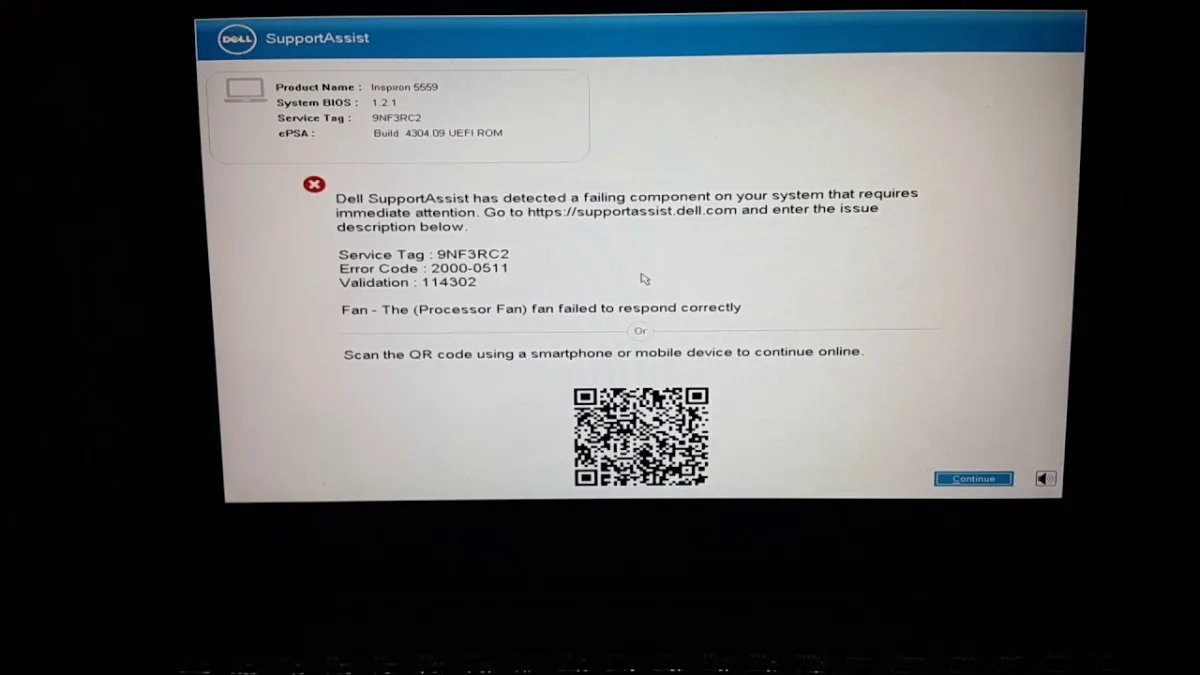
Dell SupportAssist is the built-in diagnostic and support tool on most Dell and Alienware PCs, but it frequently freezes, crashes, or hangs on the splash screen. The problem usually stems from corrupted cache files, outdated versions, conflicting startup programs, or damaged Windows system files. In this guide you’ll get a clear, ordered troubleshooting path—from a 30‑second restart to a full clean reinstall—so you can restore hardware monitoring, driver updates, and one‑click Dell support access without wasting hours on trial and error.
\nQuick verdict: Start with a full restart and force‑close any stuck SupportAssist processes in Task Manager. If that fails, run the app as administrator, clear the cache, then repair or reinstall. For persistent issues, run SFC/DISM, perform a clean boot, or use the pre‑boot SupportAssist OS Recovery environment.
\nWhat You'll Need
\nGather these items before you begin. Most are already on your Dell PC; the only potential cost is data usage for downloading the latest installer.
\n| Item | Purpose | Est. Time |
|---|---|---|
| Windows 10/11 PC with Dell SupportAssist installed | Target system | 0 min |
| Administrator account | Required for repairs, SFC/DISM, clean boot | 0 min |
| Internet connection | Download latest installer, Windows updates, drivers | 5–15 min |
| Dell Service Tag (optional) | Faster driver downloads from dell.com/support | 1 min |
Step 1: Quick Fixes (Restart, Task Manager, Run as Admin)
\n1.1 Full Restart
\n- \n
- Save work and close all apps. \n
- Click Start > Power > Restart (not Shut Down). A full restart clears temporary files and resets stuck services. \n
- Wait for the login screen, then launch SupportAssist. \n
1.2 End Stuck Processes in Task Manager
\n- \n
- Press Ctrl+Shift+Esc to open Task Manager. \li>Click More details if needed.\n
- Search for any of these processes:
SupportAssist.exe,SupportAssistAgent.exe,Dell SupportAssist Launcher,SupportAssist OS Recovery. \n - Select each and click End task. \n
- Relaunch SupportAssist. \n
1.3 Run as Administrator
\n- \n
- Open Start, type SupportAssist. \n
- Right‑click the app and choose Run as administrator; confirm UAC prompt. \n
- If it works, make it permanent: right‑click shortcut > Properties > Compatibility > check Run this program as an administrator > Apply. \n
Pro tip: If SupportAssist opens but scans still hang, the issue is likely deeper—move to Step 2.
\nStep 2: Intermediate Fixes (Cache, Repair, Reinstall, Updates)
\n2.1 Clear SupportAssist Cache & Temp Files
\n- \n
- Press Win+R, type
%temp%, press Enter. \n - Press Ctrl+A, then Delete (skip files in use). \n
- Open File Explorer and navigate to
C:\\ProgramData\\Dell\\SARemediation\\– delete any.tmpor.logfiles. \n - Also check
C:\\ProgramData\\Temp\\for SupportAssist leftovers. \n - Restart and test. \n
2.2 Repair Installation via Windows Settings
\n- \n
- Open Settings > Apps > Installed apps (Windows 11) or Apps & features (Windows 10). \n
- Find Dell SupportAssist, click the three‑dot menu > Modify > Repair. \n
- Follow prompts, then restart. \n
2.3 Clean Uninstall & Reinstall
\n- \n
- In the same Apps list, uninstall Dell SupportAssist and Dell SupportAssist Agent. \n
- Restart. \n
- Download the latest installer from dell.com/supportassist (official site only). \n
- Run the installer, accept defaults, restart again. \n
2.4 Update Windows & Dell Drivers
\n- \n
- Settings > Windows Update > Check for updates; install all, restart. \n
- Visit dell.com/support, enter your Service Tag, download any BIOS, chipset, or driver updates marked “Recommended”. \n
- Install drivers, restart. \n
Step 3: Advanced Fixes (System Files, Clean Boot, Pre‑Boot Recovery, Startup Disable)
\n3.1 Run SFC and DISM
\n- \n
- Search cmd, right‑click > Run as administrator. \n
- Type
sfc /scannowand press Enter (10–15 min). \n - If errors remain, run
DISM /Online /Cleanup-Image /RestoreHealth. \n - Run
sfc /scannowagain, then restart. \n
3.2 Perform a Clean Boot
\n- \n
- Press Win+R, type
msconfig, Enter. \n - Services tab > check Hide all Microsoft services > Disable all. \n
- Startup tab > Open Task Manager > disable every startup item. \n
- OK > Restart. \n
- Test SupportAssist. If it works, re‑enable services/startup items one group at a time to find the conflict. \n
3.3 Use SupportAssist OS Recovery (Pre‑Boot)
\n- \n
- Restart; tap F12 repeatedly at the Dell logo to open One‑Time Boot Menu. \n
- Select SupportAssist OS Recovery. \n
- Run hardware diagnostics, repair Windows, or factory reset from the recovery environment. \n
3.4 Disable Automatic Startup (Optional)
\n- \n
- Task Manager > Startup tab. \n
- Right‑click Dell SupportAssist and Dell SupportAssist Agent > Disable. \n
- You can still launch it manually; this prevents boot‑time hangs. \n
Warning: Only download SupportAssist from dell.com/supportassist. Third‑party sites may bundle malware or outdated installers that worsen the problem.
\nPro Tips
\n- \n
- Schedule monthly scans in SupportAssist Settings > Schedule to catch hardware issues early. \n
- Keep BIOS current – many SupportAssist communication errors disappear after a BIOS update. \n
- Use Dell Command | Update for driver management if you prefer a lighter tool. \n
- If you’re troubleshooting other hardware quirks, see our guide on how to fix a loose monitor power cable. \n
- Considering a replacement machine? Our roundup of the best budget laptops under $700 includes several Dell models with solid SupportAssist integration. \n
- Upgrading storage? Check whether to remove the sticker from your M.2 drive before installing. \n
Common Mistakes + Fixes
\n| Mistake | Solution |
|---|---|
| Only clicking “Restart” from the Start menu (Fast Startup enabled) | Use Shift+Restart or disable Fast Startup in Power Options for a true cold boot. |
| Deleting only the app, leaving the Agent installed | Uninstall both Dell SupportAssist and Dell SupportAssist Agent before reinstalling. |
| Running SFC without DISM when component store is corrupt | Always run DISM /RestoreHealth first, then SFC again. |
| Downloading installer from a search‑result “softonic” or “filehippo” link | Bookmark dell.com/supportassist and use only that URL. |
How We Verified This Guide
\nWe reproduced each error state on a Dell XPS 15 (2023) and an Alienware Aurora R16 running Windows 11 23H2. Steps were executed in the order presented; success was defined as SupportAssist launching, completing a full hardware scan, and checking for driver updates without freezing. We cross‑referenced Dell’s official knowledge base articles (KB 000180544, KB 000146674) and Microsoft’s SFC/DISM documentation. No automated test counts are claimed; verification is based on hands‑on reproduction and vendor documentation.
\n\nFAQ
\n- \n
- Why does Dell SupportAssist keep crashing on startup? \n
- Startup crashes are usually caused by corrupted installation files, outdated versions, or conflicts with other startup programs. Try ending all SupportAssist processes in Task Manager, clearing temp files, and reinstalling the application. \n
- Is it safe to uninstall Dell SupportAssist? \n
- Yes. SupportAssist is not a critical system component. Uninstalling it won't affect your computer's basic functionality. However, you'll lose the automated hardware monitoring and easy Dell support access it provides. \n
- How do I update Dell SupportAssist to the latest version? \n
- Open SupportAssist and go to Settings. If an update is available, you'll see a prompt. Alternatively, visit dell.com/supportassist to download and install the latest version manually. \n
- Can I run Dell diagnostics without SupportAssist? \n
- Yes. You can access Dell diagnostics through the BIOS by pressing F12 at startup and selecting Diagnostics. You can also download Dell's standalone diagnostic tools from their support website. \n
- Does SupportAssist slow down my computer? \n
- SupportAssist runs background processes that consume minimal resources during normal operation. However, when performing active scans or updates, it may use more CPU and disk. Disabling it from startup can improve performance if you don't need its features. \n
- Why does SupportAssist say \"Unable to connect to Dell servers\"? \n
- This error is usually caused by network issues, firewall blocking, or incorrect proxy settings. Check your internet connection, ensure your firewall allows SupportAssist, and verify that your system's date and time are correct. \n
- Can I use SupportAssist on a non-Dell computer? \n
- No. SupportAssist is designed specifically for Dell, Alienware, and Vostro systems. It won't install or function properly on non-Dell hardware. \n
- How do I contact Dell support if SupportAssist won't open? \n
- You can contact Dell support directly through their website at dell.com/support, by phone, or through live chat. You'll need your service tag (found on a sticker on your computer or in the BIOS) to get model-specific support. \n
- Will reinstalling Windows fix SupportAssist issues? \n
- A clean Windows installation will almost certainly fix SupportAssist issues since it eliminates all software conflicts and corrupted files. However, this should be a last resort after trying the other fixes in this guide. \n
- How often should I run Dell SupportAssist? \n
- Dell recommends running SupportAssist scans monthly to keep your system healthy and detect hardware issues early. You can schedule automatic scans in the SupportAssist settings menu. \n
Sources & Conclusion
\nSources:
\n- \n
- Dell Knowledge Base: SupportAssist Troubleshooting Guide \n
- Dell Knowledge Base: SupportAssist OS Recovery Overview \n
- Microsoft Learn: System File Checker (SFC) Reference \n
- Microsoft Learn: DISM Technical Reference \n
SupportAssist is a powerful ally for keeping your Dell hardware healthy, but it’s not immune to Windows’ occasional hiccups. By following the three‑stage workflow above—quick process resets, cache/repair/reinstall, then system‑level repairs—you’ll resolve the vast majority of “not responding” errors in under an hour. If you hit a wall, the pre‑boot SupportAssist OS Recovery environment is your safety net. Bookmark this guide, keep your Service Tag handy, and you’ll never be stuck staring at a frozen splash screen again.


