How to Fix Dell Laptop White Screen (2026 Complete Guide)
A white screen on your Dell laptop can be one of the most alarming issues you encounter, as the display suddenly becomes completely blank with no error messages, no cursor, and no indication of what went wrong. This problem affects Dell laptops across multiple models including Inspiron, Latitude, XPS, and Vostro lines, and it can be caused by anything from a simple software glitch to a serious hardware failure. If you are dealing with a white screen on your Dell laptop in 2026, this comprehensive troubleshooting guide will walk you through every possible solution, from the simplest fixes to advanced hardware diagnostics, so you can get your laptop back to working condition.
Last updated: July 19, 2026 | Estimated reading time: 15 minutes
Table of Contents
- Understanding Dell White Screen Symptoms
- Common Causes of White Screen on Dell Laptops
- Quick Fixes to Try First
- Performing a Hard Reset
- Testing with an External Monitor
- Booting into Safe Mode
- Fixing Graphics Driver Issues
- BIOS and Firmware Solutions
- Hardware-Related White Screen Fixes
- Software and Windows Fixes
- Preventing White Screen Issues
- Frequently Asked Questions
Understanding Dell White Screen Symptoms
Before diving into solutions, it is important to understand the different variations of the white screen problem, as each type may have a different cause and solution.
| Symptom | Description | Likely Cause |
|---|---|---|
| Solid white screen at boot | Screen turns completely white immediately after pressing the power button | Graphics driver failure or display hardware issue |
| White screen after Windows loads | Laptop boots normally but screen goes white after login | Display driver conflict or corrupted driver |
| White screen with cursor | Screen is white but the mouse cursor is visible and responsive | Explorer.exe crash or shell issue |
| Intermittent white flashes | Screen randomly goes white for a few seconds then recovers | Loose display cable or failing GPU |
| White screen on half the display | Only part of the screen is white while the rest works | LCD panel damage or cable issue |
| White screen with visible lines | White display with horizontal or vertical colored lines | LCD panel failure or cable damage |
Identifying which type of white screen you are experiencing will help narrow down the cause and lead you to the right solution more quickly. Take note of exactly when the white screen appears and whether there are any other symptoms such as sounds, blinking lights, or cursor visibility.
Common Causes of White Screen on Dell Laptops
The white screen issue on Dell laptops can be attributed to several different causes. Understanding these causes will help you approach the problem systematically.
Software Causes
Software-related causes are the most common and easiest to fix. These include corrupted or outdated graphics drivers, Windows update conflicts, malware infections, incompatible applications, and corrupted system files. In many cases, a simple driver update or system restore can resolve the issue completely.
Hardware Causes
Hardware causes are more serious and typically more expensive to repair. These include a faulty LCD panel, damaged display cable (LVDS or eDP cable), failing graphics card or integrated GPU, loose internal connections, and motherboard issues. Hardware problems often require professional repair or component replacement.
Firmware Causes
BIOS or firmware issues can also cause white screen problems. Corrupted BIOS, outdated firmware, or incorrect BIOS settings can prevent the display from initializing properly. In some cases, a BIOS update or reset can resolve these issues.
Quick Fixes to Try First
Before attempting more complex troubleshooting, try these quick fixes that resolve the white screen issue in many cases.
1. Restart the Laptop: The simplest fix is often the most effective. If your screen is white but the laptop appears to be running, press and hold the power button for 10 seconds to force a shutdown, wait 30 seconds, then power it back on. A restart clears temporary memory and can resolve many display issues.
2. Adjust Screen Brightness: Sometimes what appears to be a white screen is actually a brightness issue. Press the Fn key along with the brightness up key (usually F11 or a key with a sun icon) to increase brightness. If the screen was accidentally set to maximum brightness with a white background, this can appear as a white screen.
3. Toggle Display Mode: Press the Fn key along with the display toggle key (usually F1 or F8) to cycle through display modes. This switches between the laptop screen, external monitor, and extended desktop modes. Sometimes the display output gets stuck on an inactive mode, causing a white screen.
4. Disconnect External Devices: Unplug all external devices including USB drives, external monitors, docking stations, and peripherals. Sometimes a faulty external device can interfere with the display output and cause a white screen.
5. Check for Physical Damage: Examine the laptop screen for any visible cracks, pressure marks, or discoloration. Physical damage to the LCD panel can cause white spots or a completely white screen. If you see physical damage, the screen likely needs to be replaced.
Performing a Hard Reset
A hard reset, also known as a power drain, resets the hardware components to their default state and can resolve many white screen issues. This process is safe and does not affect your personal files.
Follow these steps to perform a hard reset on your Dell laptop:
Step 1: Shut down the laptop completely. If the screen is white and you cannot see anything, press and hold the power button for 10-15 seconds until the laptop powers off completely.
Step 2: Unplug the AC adapter from the laptop. If the battery is removable, remove it as well. For laptops with non-removable batteries, skip this step.
Step 3: Press and hold the power button for 30 seconds. This drains any residual electrical charge from the motherboard and resets the hardware.
Step 4: Reconnect the AC adapter (and reinsert the battery if you removed it).
Step 5: Press the power button to turn the laptop back on. Check if the white screen issue is resolved.
Testing with an External Monitor
Testing with an external monitor is one of the best ways to determine whether the white screen is caused by the display panel itself or by the graphics system. If the external monitor works correctly, the problem is likely with your laptop’s LCD panel or display cable. If the external monitor also shows a white screen, the issue is likely with the graphics driver, GPU, or motherboard.
To test with an external monitor:
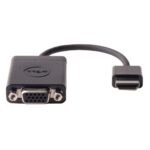
Step 1: Connect an external monitor to your Dell laptop using an HDMI, DisplayPort, or VGA cable, depending on the ports available on your laptop.
Step 2: Press the Fn key along with the display toggle key (usually F1 or F8) to switch the display output to the external monitor.
Step 3: If the external monitor shows a normal display, the issue is with your laptop’s LCD panel, display cable, or the connection between the cable and the panel. You may need to have the screen or cable replaced.
Step 4: If the external monitor also shows a white screen, the issue is with the graphics driver, GPU, or motherboard. Continue with the software troubleshooting steps below.
This simple test can save you a lot of time by immediately narrowing down whether you are dealing with a hardware or software problem.
Booting into Safe Mode
Safe Mode starts Windows with a minimal set of drivers and services, which can help you determine if a driver or software conflict is causing the white screen. If the display works normally in Safe Mode, the problem is likely caused by a recently installed driver or program.
To boot into Safe Mode on Windows 11:
Step 1: Force shut down the laptop by holding the power button for 10 seconds.
Step 2: Press the power button to turn it back on. As soon as you see the Dell logo, press and hold the power button again for 10 seconds to force shut down. Repeat this process three times.
Step 3: On the fourth boot, Windows will enter the Automatic Repair screen. Click on Advanced Options.
Step 4: Navigate to Troubleshoot > Advanced Options > Startup Settings > Restart.
Step 5: After the laptop restarts, press 4 or F4 to boot into Safe Mode, or press 5 or F5 to boot into Safe Mode with Networking.
If the display works normally in Safe Mode, the white screen is likely caused by a graphics driver issue. You can then uninstall or roll back the problematic driver from Device Manager.
Fixing Graphics Driver Issues
Corrupted, outdated, or incompatible graphics drivers are one of the most common causes of white screen issues on Dell laptops. Here is how to fix graphics driver problems.
Updating the Graphics Driver
Visit the Dell support website and enter your laptop’s service tag to find the latest graphics drivers for your specific model. Download and install the recommended driver, then restart the laptop. Dell-tested drivers are specifically optimized for your hardware and are more reliable than generic drivers from NVIDIA or AMD.
Rolling Back the Graphics Driver
If the white screen appeared after a recent driver update, you can roll back to the previous version. Open Device Manager (right-click the Start button and select Device Manager), expand Display Adapters, right-click your graphics card, select Properties, go to the Driver tab, and click Roll Back Driver if the option is available.
Clean Driver Installation
For persistent driver issues, perform a clean installation using Display Driver Uninstaller (DDU). This tool completely removes all traces of the current graphics driver, allowing you to install a fresh copy. Boot into Safe Mode, run DDU to remove the driver, restart, and then install the latest driver from Dell or the GPU manufacturer.
BIOS and Firmware Solutions
The BIOS (Basic Input/Output System) controls the initial hardware communication during boot. Issues with the BIOS can prevent the display from initializing correctly, leading to a white screen.
Updating the BIOS
Dell regularly releases BIOS updates that fix bugs and improve compatibility. Visit the Dell support website, enter your service tag, and check if a BIOS update is available for your model. Download the BIOS update executable, connect the AC adapter, and run the update. Do not shut down the laptop during the BIOS update process, as this can permanently damage the BIOS.
Resetting BIOS to Default Settings
Incorrect BIOS settings can cause display issues. To reset the BIOS to default settings, restart the laptop and press the F2 key repeatedly as the Dell logo appears to enter the BIOS setup. Navigate to the Exit or Maintenance section, select Load Default Settings or Restore Settings, and save and exit. This resets all BIOS settings to their factory defaults.
BIOS Recovery
If the BIOS is corrupted and you cannot access the BIOS setup, you can perform a BIOS recovery. Dell laptops have a built-in BIOS recovery feature that can restore the BIOS from a backup. To trigger BIOS recovery, press and hold the Ctrl + Esc keys while pressing the power button. Keep holding Ctrl + Esc until the BIOS recovery screen appears.
Hardware-Related White Screen Fixes
If software solutions do not resolve the white screen, the problem may be hardware-related. Here are the most common hardware causes and their solutions.
Display Cable (LVDS/eDP Cable)
The display cable connects the LCD panel to the motherboard. Over time, this cable can become loose or damaged, causing display issues including white screens. If you are comfortable opening your laptop, check that the display cable is securely connected at both ends. The cable runs from the motherboard, through the hinge, and to the LCD panel. Reseating the cable connections can often resolve intermittent white screen issues.
LCD Panel Failure
If the external monitor test confirmed that the laptop’s LCD panel is the problem, the panel may need to be replaced. LCD panel replacement is a moderately difficult repair that involves removing the screen bezel, disconnecting the display cable, and installing a new panel. Replacement panels for Dell laptops are widely available online and typically cost between $50 and $150 depending on the model and specifications.
Graphics Card Issues
In laptops with dedicated GPUs, the graphics card is soldered to the motherboard and cannot be easily replaced. If the GPU is failing, it may cause white screens, artifacts, or system crashes. In this case, you may need to have the motherboard replaced, which can be expensive. However, in many cases, what appears to be a GPU failure is actually a driver or thermal issue that can be resolved through software fixes or cleaning the cooling system.
Software and Windows Fixes
Several software-related issues can cause white screens on Dell laptops. Here are the most effective software fixes.
System File Checker (SFC)
Corrupted Windows system files can cause display issues. Open Command Prompt as Administrator and run the command sfc /scannow. This scans all protected system files and replaces corrupted files with cached copies. After the scan completes, restart the laptop and check if the white screen is resolved.
DISM Repair
If SFC cannot fix the corrupted files, use the Deployment Image Servicing and Management (DISM) tool. Open Command Prompt as Administrator and run DISM /Online /Cleanup-Image /RestoreHealth. This repairs the Windows system image and can fix deeper corruption issues that SFC cannot address.
System Restore
If the white screen started after a recent change, System Restore can revert your system to a previous working state. Boot into Safe Mode, search for “Create a restore point” in the Start menu, click System Restore, and select a restore point from before the white screen issue began. System Restore does not affect your personal files but will uninstall recently installed programs and drivers.
Windows Update
Sometimes a pending Windows update includes fixes for display issues. Boot into Safe Mode with Networking, connect to Wi-Fi, and run Windows Update from Settings > Windows Update. Install any available updates and restart the laptop to see if the white screen is resolved.
Malware Scan
Malware can interfere with system processes and cause display issues. Run a full system scan using Windows Defender or your preferred antivirus software. Boot into Safe Mode for the most effective scan, as Safe Mode prevents most malware from running.
Preventing White Screen Issues
While not all white screen issues can be prevented, you can reduce the likelihood of experiencing this problem by following these best practices:
- Keep drivers updated: Regularly check for and install driver updates from the Dell support website
- Install Windows updates: Keep Windows up to date with the latest security and feature updates
- Avoid overheating: Use the laptop on a hard, flat surface and clean the vents regularly to prevent overheating
- Handle the laptop carefully: Avoid dropping or bumping the laptop, as physical shock can damage the display cable or LCD panel
- Use quality peripherals: Use certified cables and peripherals to avoid compatibility issues
- Create restore points: Create a system restore point before making major system changes
- Back up your data: Regularly back up important files in case a hardware failure requires a system reinstall
Frequently Asked Questions
Q1: Why is my Dell laptop screen white when I turn it on?
A: A white screen at startup is typically caused by a graphics driver issue, loose display cable, or failing LCD panel. Start by performing a hard reset and testing with an external monitor to determine whether the issue is hardware or software related.
Q2: Can a white screen be fixed without replacing hardware?
A: Yes, many white screen issues are caused by software problems such as corrupted drivers, BIOS issues, or system file corruption. Try the software troubleshooting steps in this guide before assuming you need hardware repair.
Q3: How much does it cost to fix a Dell laptop white screen?
A: If the issue is software-related, it can often be fixed for free using the steps in this guide. If the LCD panel needs replacement, parts and labor typically cost between $100 and $250. Motherboard or GPU issues can cost $300 or more.
Q4: Is a white screen covered under Dell warranty?
A: If your Dell laptop is under warranty, hardware defects including LCD panel failures and GPU issues are typically covered. Software-related issues may not be covered. Contact Dell Support with your service tag to check your warranty status.
Q5: Can I use my Dell laptop with a white screen through an external monitor?
A: If the white screen is caused by the laptop’s LCD panel and the graphics system is working correctly, you can connect an external monitor and use the laptop as a desktop replacement. Press Fn + F8 (or the display toggle key) to switch the output to the external monitor.
Q6: Will a factory reset fix the white screen?
A: A factory reset can fix software-related white screen issues by restoring Windows to its original state. However, it will erase all your personal files and installed programs. Try less destructive options first, such as Safe Mode, driver rollback, or System Restore.
Q7: Why does my Dell laptop screen go white randomly?
A: Random white screen occurrences are often caused by a loose display cable, overheating, or an intermittent GPU issue. Check the display cable connections, clean the cooling vents, and monitor your laptop’s temperature to identify the cause.
Q8: Can overheating cause a white screen on a Dell laptop?
A: Yes, overheating can cause the GPU or display system to malfunction, resulting in a white screen. Clean the cooling vents, ensure the laptop is on a hard surface for proper airflow, and consider using a laptop cooling pad to prevent overheating.
Q9: How do I know if my Dell laptop LCD panel needs to be replaced?
A: If an external monitor displays correctly but the laptop screen shows a white screen, the LCD panel or its cable is likely faulty. Connect an external monitor and test. If the external display works but the laptop screen remains white, the LCD panel or display cable needs attention.
Q10: Is it safe to keep using my Dell laptop with a white screen?
A: If the laptop is functioning normally otherwise (you can hear sounds, the keyboard backlight works, etc.), it is generally safe to use with an external monitor. However, continued use with a hardware issue could potentially worsen the problem. It is best to address the issue as soon as possible.